Bengal, Bihar Link Voter Roll Cleanup to Welfare Schemes
The governments of West Bengal and Bihar are using SIR voter roll data to remove duplicate and ineligible beneficiaries from the ration and welfare schemes.
 Ellofacts
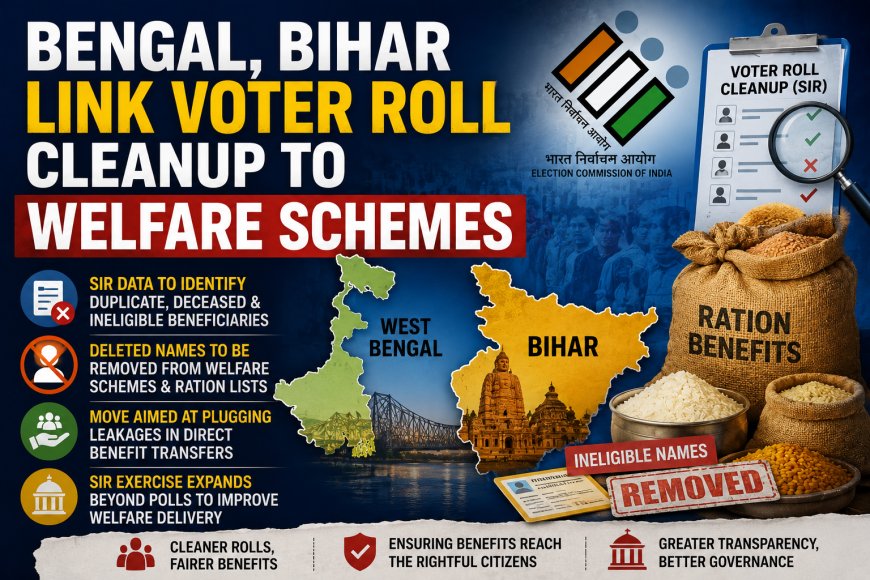
The Election Commission of India’s Special Intensive Revision (SIR) drive is now extending beyond voter list verification and beginning to impact government welfare schemes in states like West Bengal and Bihar. Authorities are increasingly using the updated electoral roll data to identify duplicate, deceased, and allegedly ineligible beneficiaries receiving state welfare benefits.
The SIR exercise was originally launched to clean up electoral rolls by removing fake, repeated, or invalid voter entries. However, state governments are now linking this data with welfare databases to prevent leakages in subsidy and direct benefit transfer systems.
In West Bengal, where the Bharatiya Janata Party recently formed its first government under Chief Minister Suvendu Adhikari, officials have indicated that individuals whose names are deleted from voter rolls during the SIR process may lose eligibility for multiple welfare schemes. The move is aimed at ensuring that only verified residents and eligible citizens continue receiving state benefits.
A similar process is already underway in Bihar. The BJP-led NDA government has reportedly begun removing names from ration card beneficiary lists based on deletions identified through the electoral revision process. According to reports, the state administration is cross-checking welfare records with electoral data to identify duplicate or inactive beneficiaries.
Samrat Choudhary also stated that individuals removed from Bihar’s electoral rolls may no longer qualify for various government benefits, including ration schemes and other welfare assistance programs. The government believes the exercise will help reduce fraud and improve the efficiency of welfare distribution.
The development has sparked political debate, with opposition parties questioning whether linking electoral roll deletions with welfare eligibility could affect genuine beneficiaries. Critics argue that errors during the voter verification process may unintentionally impact deserving citizens who depend on government support.
Meanwhile, supporters of the initiative say the integration of voter verification data with welfare databases could strengthen transparency, eliminate ghost beneficiaries, and reduce financial leakages in public distribution and subsidy systems.
The expanded use of the SIR exercise marks a significant shift in how electoral data may increasingly influence governance, welfare administration, and beneficiary verification across states.