
Air India Cuts International Flights Amid Rising Fuel Prices
Air India suspends and reduces several international flights as soaring jet fuel prices and longer routes increase operational costs.
 Ellofacts
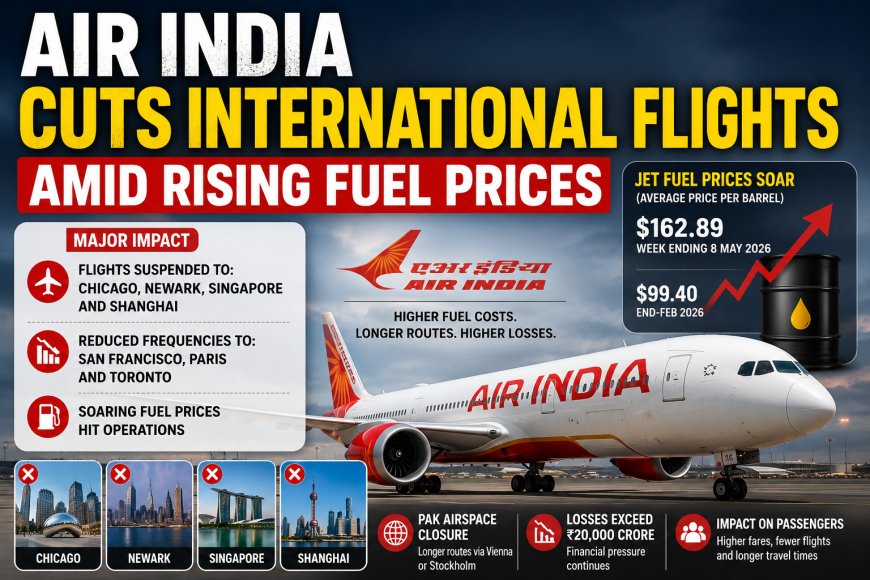
Air India has announced major reductions across its international flight network as rising global jet fuel prices continue to impact airline operations worldwide. The Tata-owned carrier will implement these temporary cuts for nearly three months starting from June 2026, aiming to reduce operational pressure and control mounting costs.
As part of the restructuring, Air India has suspended flights from Delhi to several important international destinations, including Chicago, Newark, Singapore, and Shanghai. In addition, the airline has reduced flight frequencies to major cities such as San Francisco, Paris, and Toronto. The decision reflects the growing financial strain caused by the sharp increase in aviation fuel prices and operational expenses.
According to global market data, average jet fuel prices surged dramatically from around $99 per barrel in February to nearly $163 per barrel during the second week of May 2026. Aviation experts note that fuel expenses account for nearly 35% to 40% of an airline’s total operating costs. As a result, even a moderate rise in fuel prices can significantly impact airline profitability, ticket pricing, and route sustainability.
The ongoing geopolitical tensions in West Asia have further intensified the crisis for the aviation sector. Airlines across the world are facing higher fuel bills, longer travel routes, and increased operational uncertainty. For Air India, the situation has become even more challenging due to the closure of Pakistani airspace. Flights operating between India and destinations in Europe or North America are now forced to take longer alternate routes, increasing fuel consumption and travel time.
Several North America-bound Air India flights are reportedly making technical stops in cities like Vienna and Stockholm for refuelling and crew management. These additional stopovers have increased both operational costs and scheduling complexity for the airline.
Air India CEO Campbell Wilson recently informed employees that the company would continue monitoring global fuel prices and adjust international services accordingly. Industry analysts believe airlines may further reduce frequencies or increase ticket prices if fuel prices continue rising over the coming months.
The airline is already facing significant financial pressure, with reported accumulated losses exceeding ₹20,000 crore. Despite continued investments and restructuring efforts by the Tata Group, the current global fuel crisis has added another major challenge to Air India’s recovery plans.
Experts say passengers may soon experience higher airfare prices, limited flight availability, and longer travel durations on several international routes as airlines attempt to manage rising fuel and operational costs.