Bajaj Auto Buyback Explained: What Investors Need To Know
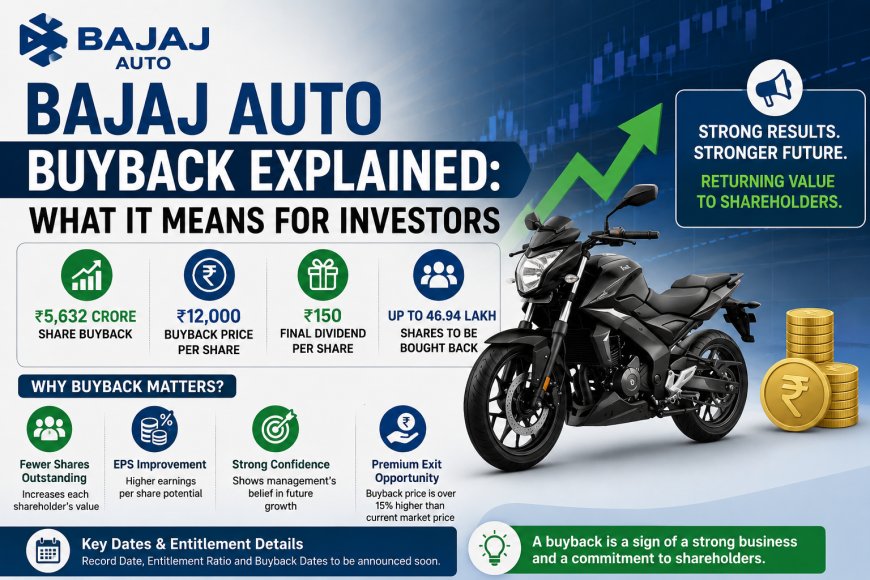
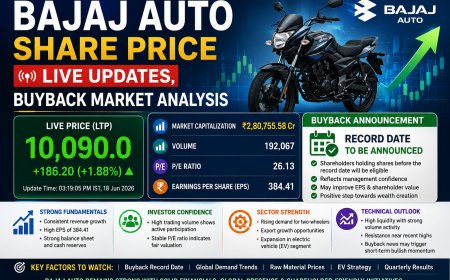
Bajaj Auto has announced a massive ₹5,632.8 crore share buyback along with a final dividend of ₹150 per share after reporting record earnings for FY26. Following the announcement, the company’s stock gained more than 3% in the market, attracting strong investor attention.
But what exactly does a buyback mean for shareholders, and why is this announcement important? Here’s a simplified breakdown of how the Bajaj Auto buyback works and what investors should watch closely.
What Is A Share Buyback?
A share buyback happens when a company purchases its own shares from existing shareholders. These shares are usually cancelled, reducing the total number of shares available in the market.
Think of it like sharing a cake among fewer people. Even if the size of the cake remains the same, each person receives a larger portion. Similarly, when the number of shares decreases, each remaining shareholder gets a bigger share of the company’s profits.
For example:
- A company earns ₹100 profit with 10 shares outstanding.
- Each share effectively represents ₹10 of profit.
- If the company buys back 2 shares, only 8 shares remain.
- The same ₹100 profit is now divided among fewer shares.
This can improve metrics like Earnings Per Share (EPS), which investors often view positively.
Companies generally announce buybacks when they:
- Have strong cash reserves
- Generate healthy profits
- Want to reward shareholders
- Believe their business outlook remains strong
Key Details Of Bajaj Auto’s Buyback
Here are the major details announced by Bajaj Auto:
| Particulars |
Details |
| Buyback Size |
₹5,632.8 crore |
| Buyback Price |
₹12,000 per share |
| Buyback Method |
Tender Route |
| Shares To Be Bought Back |
Up to 46.94 lakh shares |
| Percentage Of Equity |
Around 1.68% |
| Final Dividend |
₹150 per share |
The company is yet to announce:
- Record date
- Entitlement ratio
- Buyback opening date
- Closing date
These updates are expected soon.
Why Investors Are Focusing On The Buyback Price
One major reason the buyback is drawing attention is the buyback price of ₹12,000 per share.
The announced price is more than 15% above the stock’s recent market price. This creates a potential premium exit opportunity for eligible shareholders participating in the tender offer.
However, investors should remember:
- Not all tendered shares may be accepted
- Final acceptance depends on participation levels
- Entitlement and acceptance ratios will play a key role
Because of this, investors are waiting for the official record date and entitlement details before making decisions.
Why Is Bajaj Auto Doing This Buyback?
The buyback becomes even more interesting because it comes during a period of strong growth for the company.
During FY26, Bajaj Auto reported:
- Revenue growth of 17% to ₹58,732 crore
- EBITDA growth of 19% to ₹12,019 crore
- Profit after tax growth of 21% to ₹9,825 crore
- EBITDA margin improvement to 20.5%
On a consolidated basis:
- Revenue rose 23% to ₹62,905 crore
- PAT jumped 47% to ₹10,744 crore
The company also saw:
- Record export performance
- Rapid EV expansion
- Chetak revenue crossing ₹4,000 crore
- Continued global growth in KTM and Triumph partnerships
Unlike some buybacks announced during slow business phases, Bajaj Auto continues investing heavily in:
- Electric vehicles
- Premium motorcycles
- Global exports
- International partnerships
This signals strong management confidence in future growth while still rewarding shareholders.
How The Buyback Can Impact Investors
1. EPS May Improve
Earnings Per Share (EPS) is calculated as:
EPS=Number of Shares OutstandingProfit
When outstanding shares reduce after a buyback, EPS can rise even if profits stay unchanged. Higher EPS can sometimes improve market sentiment and company valuation.
2. Shareholders Get A Premium Exit Opportunity
Since Bajaj Auto is using the tender route, eligible investors can offer shares back to the company at ₹12,000 per share.
Because this price is significantly above the current market value, some investors may choose to book profits through the buyback.
3. Positive Market Sentiment
Buybacks are often interpreted as a sign that management believes the company is financially strong and undervalued.
In Bajaj Auto’s case, the buyback follows record profits, strong exports, and rapid EV business growth, strengthening investor confidence.
How The Tender Route Works
Under the tender route:
- Eligible shareholders can tender shares to the company
- The company buys shares at a fixed buyback price
- Acceptance depends on entitlement and participation levels
Important terms investors should know:
Record Date: Determines which shareholders are eligible for the buyback.
Entitlement Ratio: Indicates the minimum number of shares a shareholder may be allowed to tender.
Acceptance Ratio: Shows how many tendered shares the company actually accepts.
These details have not yet been announced.
Important Things Investors Should Watch
Before participating, investors should monitor:
Record Date
Eligibility depends on owning shares before the record date.
Share Price Volatility
Stocks often become volatile around buyback announcements and record dates.
Tax Implications
Tax treatment can vary depending on holding period and investor category.
Long-Term Fundamentals
While buybacks can support sentiment, long-term stock performance still depends on future business growth, profitability, exports, and EV expansion.
Conculsion
Bajaj Auto’s ₹5,632.8 crore buyback stands out because it comes alongside record revenue, strong profit growth, rising exports, and aggressive EV expansion.
For investors, the buyback offers both:
- A possible short-term premium opportunity through the tender route
- A strong signal of the company’s financial confidence
However, shareholders should closely track the upcoming record date, entitlement ratio, and acceptance details before making investment decisions.

 Ellofacts