Hanuman Jayanti: Significance, History, Rituals and Celebrations
Know the significance of Hanuman Jayanti, its history, rituals, celebrations and the spiritual importance of Lord Hanuman in Hindu tradition and culture.
 Ellofacts
Hanuman Jayanti: Significance, History, Rituals and Celebrations
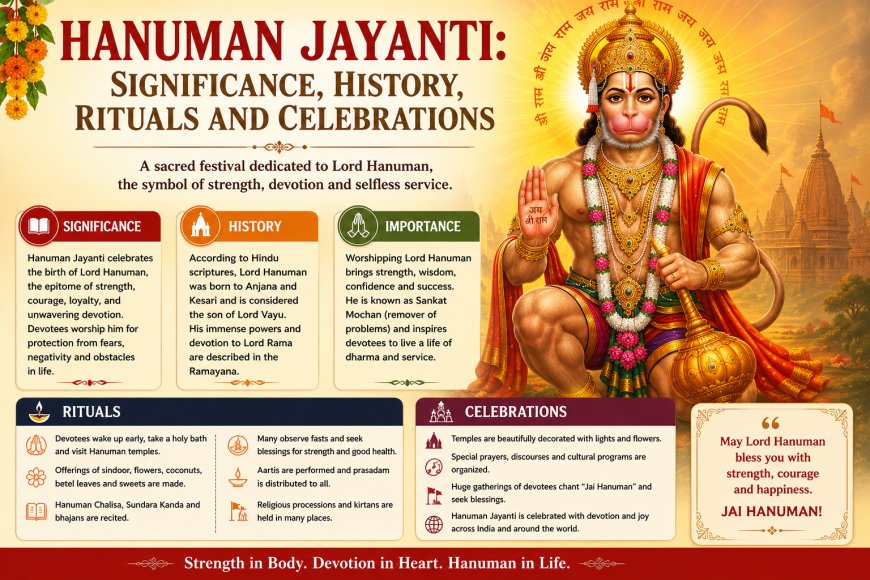
Hanuman Jayanti is one of the most important Hindu festivals dedicated to Lord Hanuman, the symbol of strength, devotion, courage and loyalty. The festival marks the birth anniversary of Lord Hanuman, who is widely worshipped as a devoted follower of Lord Rama and a powerful protector against evil forces.
Celebrated with great devotion across India, Hanuman Jayanti holds special importance among devotees who seek strength, wisdom, confidence and protection in life. Temples dedicated to Lord Hanuman witness large gatherings of devotees who offer prayers, chant hymns and participate in religious processions on this sacred occasion.
Significance of Hanuman Jayanti
Hanuman Jayanti symbolises devotion, selfless service and unwavering faith. Lord Hanuman is considered an embodiment of physical power, mental strength and spiritual discipline. Devotees believe worshipping him helps remove fear, negativity and obstacles from life.
In Hindu mythology, Lord Hanuman played a major role in the epic Ramayana by helping Lord Rama rescue Goddess Sita from Ravana. His loyalty, bravery and dedication continue to inspire millions of people around the world.
Many people observe fasts and recite sacred texts such as the Hanuman Chalisa and Sundara Kanda on this day to seek blessings for health, success and peace.
History and Mythological Importance
According to Hindu scriptures, Lord Hanuman was born to Anjana and Kesari and is believed to be the spiritual son of Vayu, the wind god. Several stories from mythology describe his extraordinary powers and divine abilities from childhood itself.
One of the most popular stories narrates how young Hanuman mistook the sun for a fruit and leapt into the sky to catch it. Impressed by his strength and courage, several gods blessed him with immense powers and protection.
Lord Hanuman is also known as Bajrangbali, Maruti, Pavan Putra and Sankat Mochan, each name reflecting different aspects of his divine personality and powers.
Rituals and Celebrations
Hanuman Jayanti is celebrated with religious enthusiasm in temples and homes across different parts of India. Devotees wake up early, take holy baths and visit Hanuman temples to offer flowers, vermilion, coconuts and sweets.
Special prayers, bhajans and recitations of Hanuman Chalisa are organised throughout the day. In several temples, priests perform elaborate aartis and distribute prasadam among devotees.
Many followers observe day-long fasting and spend time reading scriptures related to Lord Hanuman and the Ramayana. Religious processions carrying idols and flags are also conducted in several cities and towns.
Temples in states like Andhra Pradesh, Maharashtra, Karnataka and Uttar Pradesh witness heavy crowds during the celebrations.
Spiritual Message of Hanuman Jayanti
Hanuman Jayanti teaches values such as humility, discipline, dedication and courage. Lord Hanuman is often seen as the perfect example of devotion and service without pride or selfishness.
Devotees believe that remembering Lord Hanuman during difficult times helps overcome fear and challenges with confidence. His life continues to inspire people to stay strong, truthful and committed to righteousness.
The festival also reminds people about the importance of faith, positivity and inner strength in everyday life.