RBI Warns Fuel Prices May Rise Amid Ongoing Middle East Crisis
RBI Governor Sanjay Malhotra warns petrol and diesel prices may rise in India if the Middle East crisis continues and global crude oil prices remain high.
 Ellofacts
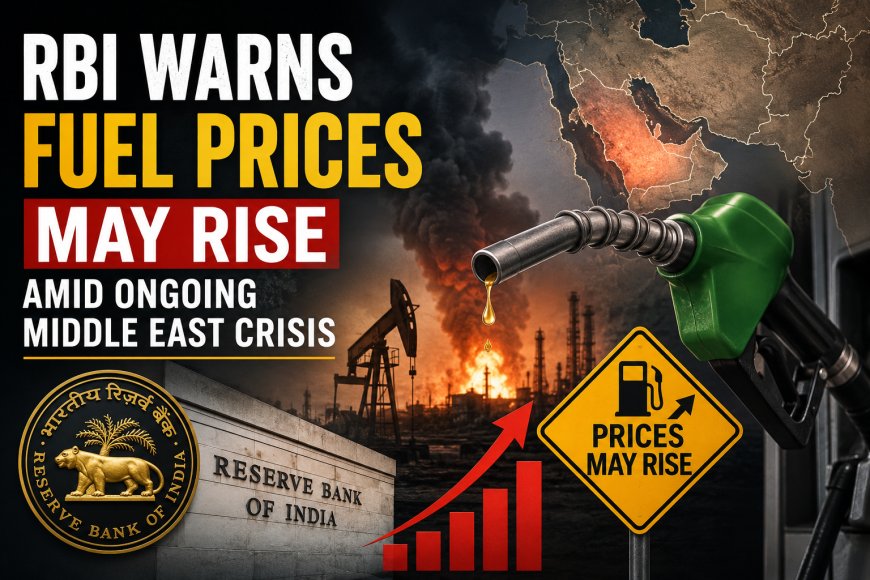
Fuel Prices May Rise If Middle East Crisis Continues, Says RBI Governor
Reserve Bank of India Governor Sanjay Malhotra has warned that petrol and diesel prices in India could increase if the ongoing Middle East crisis continues for a longer period. The statement comes amid rising concerns over global crude oil prices and their impact on the Indian economy.
Speaking about the situation, the RBI governor said that while the government has so far managed to shield consumers from immediate fuel price hikes, prolonged geopolitical tensions could eventually force authorities to pass on some of the increased costs to the public. He noted that rising international oil prices and disruptions in global supply chains are putting pressure on India’s import bill.
The conflict in the Middle East, which intensified on February 28, has created uncertainty in global energy markets. Since India imports a large share of its crude oil requirements, any major rise in global oil prices directly affects transportation costs, inflation, and overall economic stability.
Despite these challenges, the central government has not revised retail petrol and diesel prices in recent months. However, experts believe the longer the crisis continues, the more difficult it may become to maintain stable fuel rates without increasing the financial burden on oil companies and the economy.
The weakening Indian rupee has added to the pressure. The rupee has fallen below the 95 mark against the US dollar, making crude oil imports more expensive for India. A weaker currency increases import costs, which could eventually reflect in domestic fuel prices and higher inflation across sectors.
Meanwhile, Narendra Modi has appealed to citizens to reduce unnecessary fuel consumption and adopt energy-saving practices. He also encouraged people to cut down on the use of imported edible oils and focus on conserving foreign exchange reserves during this challenging global economic situation.
Economists warn that if geopolitical tensions escalate further, industries dependent on transportation and logistics could face higher operational costs. This may lead to increased prices for essential goods, air travel, and public transportation. Rising fuel prices may also affect household budgets and consumer spending patterns in the coming months.
Market analysts are closely monitoring international crude oil movements and government policy decisions. Any sustained increase in crude prices could push inflation higher and influence future monetary policy decisions by the RBI. For now, the government continues to monitor the situation while attempting to balance inflation control and economic growth.