Nilgiris in Danger: Climate Change Hits India’s Blue Mountains
Nilgiris face rising threats from climate change and human activity. Explore heatwaves, melting glaciers, and environmental risks in India.
 Ellofacts
World Environment Day: India’s Blue Mountains Under Pressure as Climate Crisis Deepens
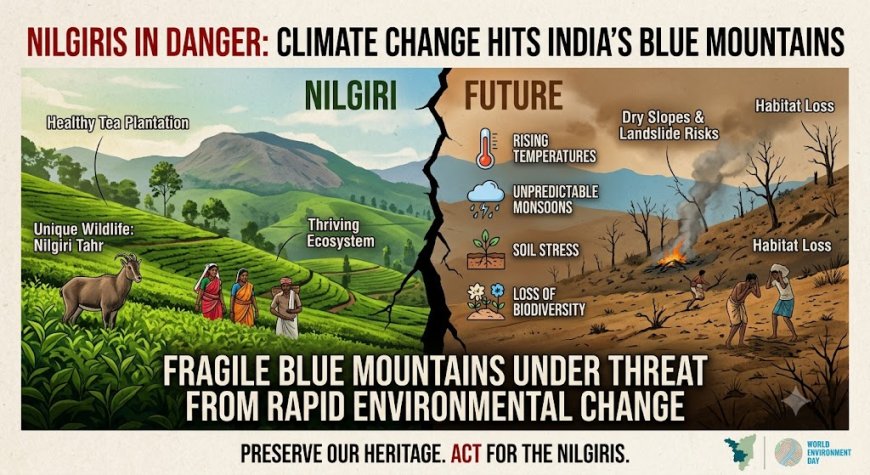
On World Environment Day, attention turns to India’s fragile ecosystems, especially the Nilgiris—often called the “Blue Mountains.” Known for its mist-covered hills, rich biodiversity, tea plantations, and unique wildlife, the region is now facing growing environmental stress from both climate change and human activity.
From rising temperatures to habitat loss, the Nilgiris represent a larger environmental warning for India, where natural ecosystems are increasingly under pressure.
The Nilgiris: A Biodiversity Hotspot in Crisis
The Nilgiri Hills, part of the Western Ghats, are one of India’s most ecologically sensitive regions. Home to rare species of flora and fauna, the region also supports indigenous communities and a major agricultural economy.
However, rapid urban expansion, tourism pressure, deforestation, and unregulated construction are altering the natural balance of the hills. Fragile slopes are becoming more vulnerable to landslides, while forest fragmentation is threatening wildlife corridors.
Experts warn that unchecked development could permanently damage the ecological stability of the region.
Climate Change Impacts Across India
India is experiencing multiple climate-related challenges that are becoming more severe each year. On this World Environment Day, five key climate realities stand out:
1. Rising Heatwaves Across Regions
Extreme heat events are becoming more frequent and intense, affecting agriculture, water availability, and human health across cities and rural areas.
2. Melting Himalayan Glaciers
The Himalayas are losing ice at an alarming rate, threatening long-term river flow systems that millions depend on for drinking water and irrigation.
3. Erratic Monsoon Patterns
Changing rainfall patterns are disrupting farming cycles, causing floods in some regions and droughts in others.
4. Loss of Forest Cover
Deforestation and land-use change are reducing biodiversity and weakening natural carbon storage systems.
5. Coastal Vulnerability
Rising sea levels and stronger cyclones are increasing risks for India’s coastal communities and infrastructure.
Why the Nilgiris Matter in This Climate Story
The Nilgiris are not just a scenic destination—they act as a critical ecological buffer for southern India. Forests here regulate rainfall patterns, store carbon, and maintain soil stability.
Damage to this region could have ripple effects on water systems, agriculture, and biodiversity far beyond the hills themselves.
Human Pressure Adding to Environmental Stress
While climate change is a major factor, human activity is accelerating the damage. Expanding tourism infrastructure, unplanned settlements, and agricultural intensification are putting pressure on forests and water resources.
Waste management challenges and increased vehicular movement are also contributing to pollution in sensitive zones.
The Need for Urgent Conservation Action
Experts emphasise the importance of balancing development with ecological protection. Sustainable tourism, stricter construction regulations, forest restoration, and community-led conservation efforts are seen as key solutions.
Protecting the Nilgiris is not just about preserving natural beauty—it is about securing water security, climate stability, and biodiversity for future generations.
Conclusion
As India observes World Environment Day, the story of the Nilgiris highlights a larger national challenge. Climate change and human pressure are reshaping ecosystems at an unprecedented pace.
The choices made today will determine whether fragile regions like the Blue Mountains continue to thrive—or face irreversible damage in the coming decades.