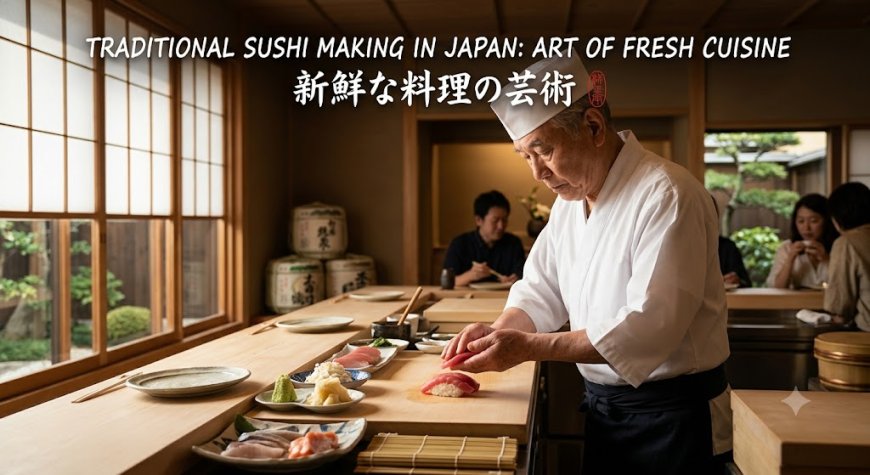
Traditional Sushi Making in Japan: Art of Fresh Cuisine

Explore traditional sushi making in Japan, where fresh ingredients, skilled chefs, and cultural artistry create a world-famous culinary experience.

Traditional Sushi Making in Japan: Art of Fresh Cuisine

Sushi is one of the most celebrated dishes of Japan, known for its elegant simplicity, fresh ingredients, and deep cultural heritage. What began centuries ago as a preservation technique for fish has now transformed into a refined culinary art enjoyed across the world.

At the heart of sushi making is perfectly prepared vinegared rice called shari. This rice is seasoned with a careful balance of rice vinegar, sugar, and salt, then cooled to achieve the ideal texture—soft yet slightly sticky. This foundation is what gives sushi its signature taste and structure.

Freshness is essential in sushi preparation. Chefs select high-quality seafood such as tuna, salmon, eel, and shrimp, along with vegetables like cucumber and avocado. Each ingredient is handled with precision to preserve its natural flavour. The slicing technique is especially important, as even small differences can affect texture and presentation.

There are many types of sushi enjoyed worldwide. Nigiri features hand-pressed rice topped with fish, maki is rolled sushi wrapped in seaweed, and temaki is a cone-shaped hand roll filled with rice and ingredients. Each style offers a unique way to experience Japanese flavours.

Sushi preparation is considered a disciplined craft in Japan, requiring years of training. Sushi chefs, known as itamae, dedicate themselves to mastering knife skills, rice preparation, and artistic presentation. Beyond cooking, it is seen as a philosophy of respect for ingredients and balance of flavours.

Today, sushi has become a global cuisine, but its roots remain deeply connected to Japanese tradition, where precision, freshness, and artistry define every bite.