AP to Get New Machilipatnam-Repalle Railway Line Soon

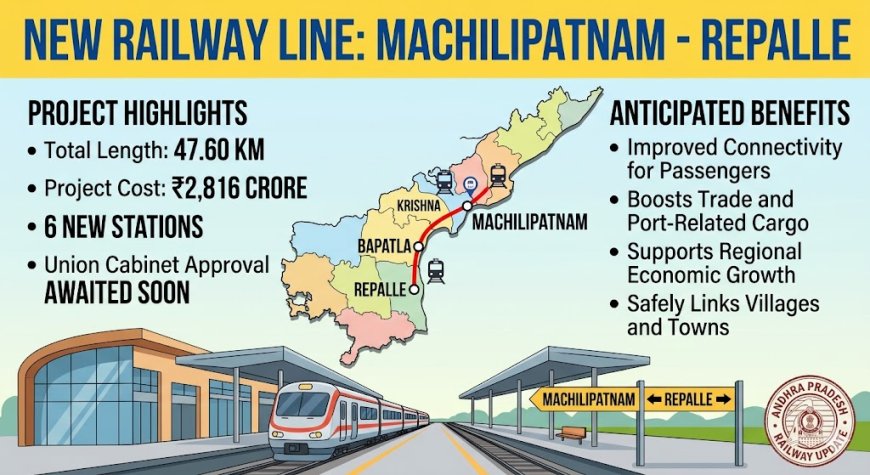
Andhra Pradesh to get the new Machilipatnam-Repalle railway line project worth Rs 2,816 crore with six stations, bridges, and improved connectivity.

AP to Get New Machilipatnam-Repalle Railway Line Soon

Another New Railway Line in AP: ₹2,816 Crore Machilipatnam–Repalle Project Set for Approval

A long-pending railway dream in Andhra Pradesh is finally moving towards reality. The proposed Machilipatnam–Repalle railway line project, estimated to cost ₹2,816 crore, is expected to receive Union Cabinet approval soon. Once approved, construction work on the new railway corridor is likely to begin in phases.

The new railway line will stretch across 47.60 kilometres and is expected to significantly improve rail connectivity between Krishna and Bapatla districts. As part of the project, six new railway stations will be constructed along the route to improve transportation facilities for passengers and support regional development.

According to reports, the Detailed Project Report (DPR) and final location survey for the Machilipatnam–Repalle line have already been completed and submitted to the Central Government with approval from the Railway Board. The project has now reached the final stage of clearance from the Union Cabinet.

The railway corridor will also include major infrastructure development works. Officials have planned the construction of nearly 70 bridges and 24 underbridges along the route to ensure smooth railway operations and safer road connectivity for nearby villages and towns.

The Machilipatnam–Repalle railway line has remained a long-standing demand of people in the coastal region for several decades. Once completed, the project is expected to improve passenger travel, support cargo movement, and boost economic activity in the surrounding areas, especially agriculture, fisheries, and port-related trade.

In recent years, the Central and State Governments have accelerated several railway infrastructure projects across Andhra Pradesh. Many projects that remained limited to paperwork for years are now gradually receiving approvals and financial support, bringing new hopes for better connectivity and regional growth across the state.