
Number Plate History: Why Vehicle Registration Plates Were Introduced
Discover the history of vehicle number plates, when they were first introduced, why registration systems began, and how number plates evolved over 130 years.
 Ellofacts
Number Plate History: When Did Vehicles Start Getting Number Plates? Know the Fascinating Story Behind It
Today, it is impossible to imagine a car, motorcycle, bus, or truck without a number plate. Every vehicle on the road carries a unique registration number that helps authorities identify the owner, track the vehicle, and enforce traffic regulations. But have you ever wondered when this system first began and why it became necessary?
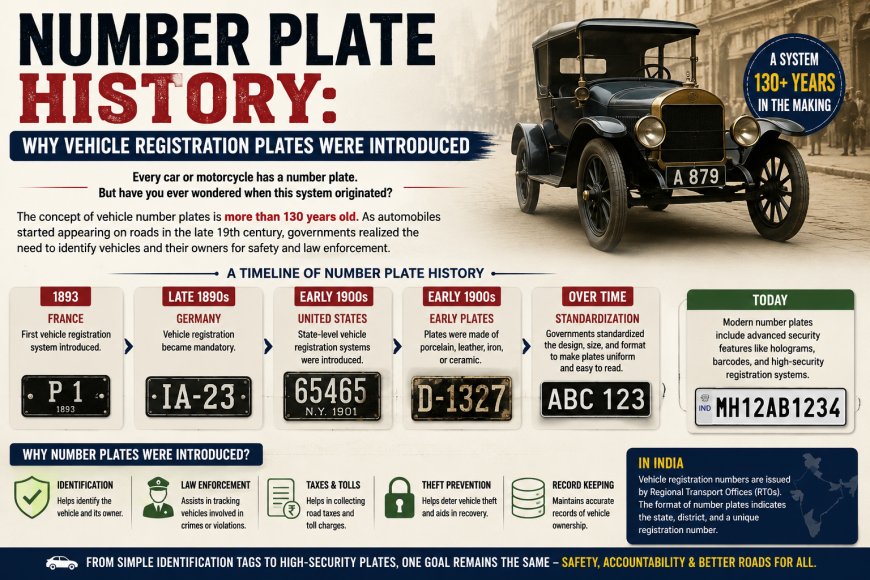
The history of vehicle number plates dates back more than 130 years. As automobiles started appearing on roads in the late 19th century, governments realised the need for a system to identify vehicles and their owners. Without any identification marks, it became difficult to monitor vehicles involved in accidents, crimes, or traffic violations.
The first known vehicle registration system was introduced in France in 1893. Authorities required vehicle owners to register their automobiles and display identification numbers. Soon, other countries followed the same practice. Germany adopted vehicle registration in the late 1890s, while the United States introduced state-level vehicle registration systems in the early 1900s.
Initially, number plates were made from materials such as porcelain, leather, iron, or ceramic. Vehicle owners often had to create their own plates displaying the assigned registration number. Over time, governments standardised the design, size, and format of number plates to make them easier to read and regulate.
Today, number plates serve several important purposes. They help law enforcement agencies identify vehicles, prevent theft, collect taxes and tolls, enforce traffic laws, and maintain accurate vehicle ownership records. Modern number plates also include advanced security features such as holograms, barcodes, and high-security registration systems to reduce fraud.
In India, vehicle registration numbers are issued by Regional Transport Offices (RTOs). Each number plate follows a standardised format that indicates the state, district, and unique vehicle registration number. With the rise of digital technologies, authorities can now instantly access vehicle details through centralised databases.
From simple identification tags in the 19th century to today's high-security registration systems, number plates have evolved significantly. Despite these changes, their primary purpose remains the same: ensuring accountability, safety, and efficient management of vehicles on public roads.