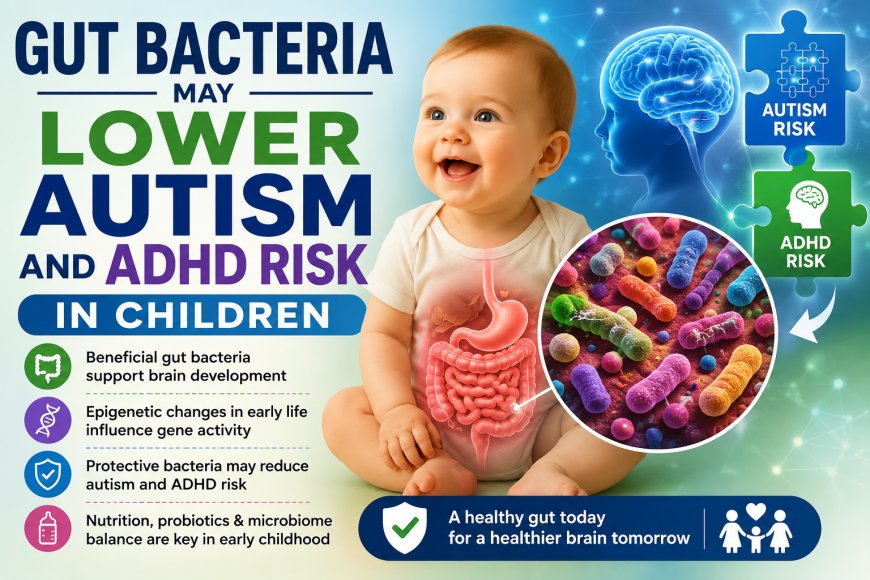
Gut Bacteria May Lower Autism and ADHD Risk in Children
New research reveals how beneficial gut bacteria and epigenetic changes in infancy may help reduce autism and ADHD risk in children.

A new scientific study has revealed a fascinating connection between the gut microbiome and epigenetic changes in early life, suggesting that certain “good” gut bacteria may help reduce the risk of neurodevelopmental conditions such as Autism Spectrum Disorder and Attention-Deficit/Hyperactivity Disorder in children.
The research, published in the journal Cell Press Blue, highlights how the trillions of microbes that begin colonising a baby’s gut after birth may interact closely with epigenetic “switches” that control gene activity. Scientists believe this interaction plays a major role in shaping brain development and long-term neurological health during infancy.
According to the study, epigenetic patterns present at birth can influence how a baby’s gut microbiome develops during the first year of life. Researchers also identified certain gut bacteria that appeared to protect children from developing signs associated with ASD and ADHD by the age of three.
Senior author Francis Ka Leung Chan from The Chinese University of Hong Kong explained that some beneficial bacteria may help lower the impact of genetic or epigenetic risk factors. He noted that these findings could eventually open doors for future interventions using diet, probiotics, or microbiome-based therapies to support healthy child development.
The research team analysed DNA methylation patterns — a key form of epigenetic modification — using umbilical cord blood samples from 571 infants. They also examined gut microbiome samples collected from 969 infants at different stages during the first year of life, along with samples from parents during pregnancy.
When the children reached 36 months of age, scientists assessed their neurodevelopment using behavioural questionnaires to identify early signs linked to autism and ADHD. The results revealed strong connections between specific epigenetic markers, microbiome composition, and neurodevelopmental outcomes.
The study found that factors such as delivery method, pregnancy duration, maternal allergies, breastfeeding, antibiotic exposure, and having older siblings all influenced the development of the infant gut microbiome. Babies born through Cesarean section showed distinct DNA methylation patterns in genes associated with immune response and brain development.
Researchers also discovered that infants with higher DNA methylation levels in certain immune-related genes tended to develop less diverse gut microbiomes during infancy. Since gut microbial diversity is often linked to stronger immune and neurological health, scientists believe this may play an important role in early brain development.
One of the most significant findings involved two beneficial bacterial species — Lachnospira pectinoschiza and Parabacteroides distasonis. These microbes appeared to reduce the likelihood of ASD- and ADHD-related traits in children who carried epigenetic risk patterns, suggesting a potentially protective effect.
The findings offer promising new insights into how the gut-brain connection may influence childhood neurodevelopment. Although researchers caution that more studies are needed before developing medical treatments, the study strengthens growing evidence that early-life nutrition, gut health, and microbial balance may have long-term effects on mental and neurological health.
Scientists hope future research could eventually lead to personalised dietary recommendations, probiotic therapies, or microbiome-based interventions designed to support healthy brain development during infancy and early childhood.
Ellofacts