Kharge Complaint Sent to Privileges Committee: Update
Rajya Sabha Chairman refers complaint against Kharge to Privileges Committee over PM remarks. Get full updates, reactions, and parliamentary developments.

Rajya Sabha Chairman Refers Complaint Against Kharge to Privileges Committee: Full Update & Political Impact
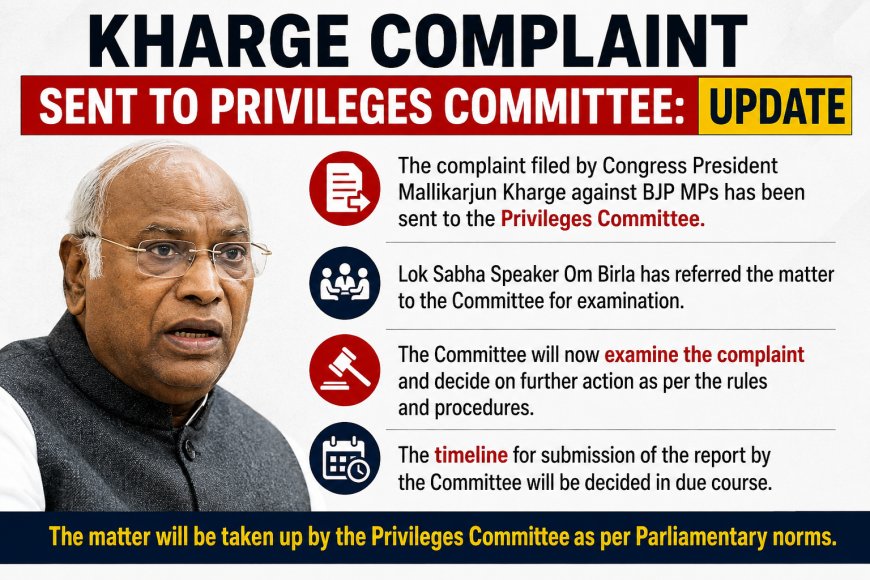
A significant political development unfolded in Parliament as the Rajya Sabha Chairman referred a complaint against Congress President Mallikarjun Kharge to the Privileges Committee over his alleged remarks regarding the Prime Minister. The move has triggered strong reactions from both the opposition and the ruling side, adding further intensity to ongoing parliamentary debates.
The complaint is based on statements reportedly made by Kharge during a recent session in the Rajya Sabha, where certain remarks directed at the Prime Minister were considered by some members as inappropriate and unparliamentary. Following objections raised in the House, a formal complaint was submitted seeking action under parliamentary privilege rules.
After reviewing the complaint and related submissions, the Rajya Sabha Chairman decided to forward the matter to the Privileges Committee, which is responsible for examining cases involving alleged breaches of parliamentary conduct. The committee will now study whether the remarks violate parliamentary norms and whether any disciplinary action is required.
The Privileges Committee of the Rajya Sabha will investigate the matter in detail by reviewing official records, including the parliamentary transcript, video footage of the proceedings, and written submissions from concerned members. If necessary, the committee may also call for clarification from the individuals involved before preparing its final report.
This development has sparked sharp political reactions. Opposition leaders have criticized the referral, claiming it reflects increasing tensions between the government and opposition parties inside Parliament. They argue that such actions could discourage open debate and restrict freedom of expression within legislative proceedings.
Meanwhile, leaders supporting the decision have stated that parliamentary dignity and decorum must be maintained at all times. They argue that the Privileges Committee exists to ensure accountability and to examine any statements or actions that may breach established parliamentary rules.
The issue comes at a time when Parliament has witnessed repeated confrontations between ruling and opposition members over various policy matters. The latest referral is expected to further heighten political discussions and could become a key talking point in upcoming parliamentary sessions.
Once the Privileges Committee completes its examination, it will submit its findings to the House, which will then decide on any further action if required. Until then, the matter remains under formal review within the parliamentary system.
This development continues to draw attention across political and media circles, highlighting ongoing debates around parliamentary conduct, freedom of speech, and institutional discipline in India’s legislative framework.