
AI Food Additive Lens App Simplifies Ingredient Info
UConn alum’s AI-powered Food Additive Lens app helps users scan labels and instantly understand food ingredients with clear, science-based insights.
 Ellofacts
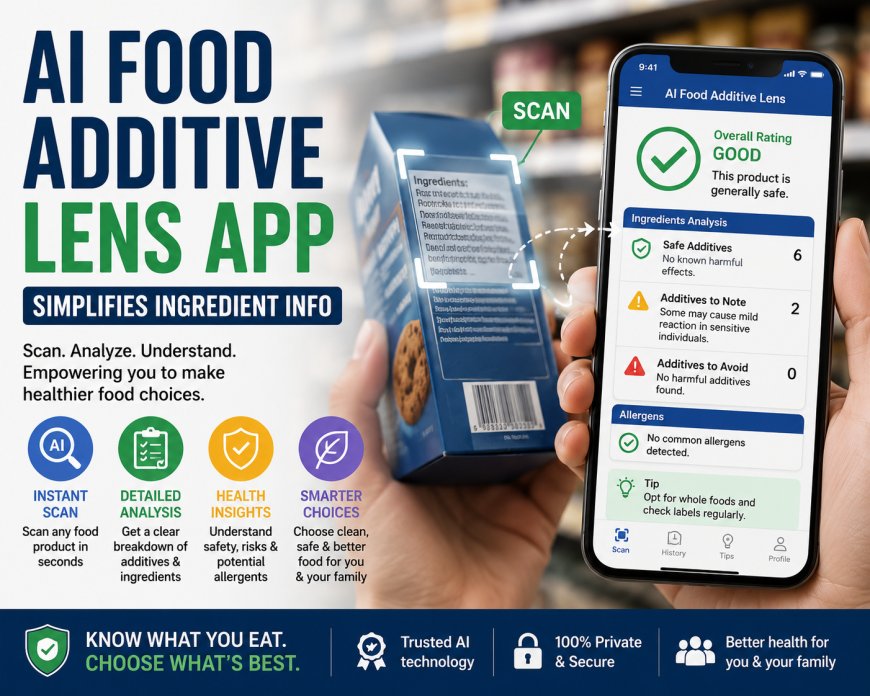
A new iPhone application called Food Additive Lens is using artificial intelligence to make food ingredient information more accessible, transparent, and easy to understand for everyday consumers as well as professionals.
Developed by Yihang Feng ’25 (CAHNR) (ENGR), the app was created during his dual academic journey as a PhD candidate in the Department of Nutritional Sciences and a master’s student in Computer Science. The tool is designed for iPhone 14 and newer models and is also available in a desktop version.
The app allows users to simply scan food ingredient labels using their phone camera and instantly receive clear, science-based explanations about additives and ingredients—right in the grocery store aisle. According to Feng, the goal is to close the gap between complex scientific information and consumer understanding. “Consumers deserve access to clear, credible information about what’s in their food,” he said, emphasising that the app delivers instant insights at the point of purchase.
Although reliable information on food additives already exists in scientific literature and regulatory databases, it is often difficult for consumers to access quickly. Food Additive Lens addresses this challenge by bringing expert-backed knowledge directly to users through a simple scanning system.
The project was developed with guidance from Feng’s advisors, Yangchao Luo, associate professor in Nutritional Sciences, and Song Han, associate professor in Computer Science. The app was built during a summer research assistantship at the Institute for the Advancement of Food and Nutrition Sciences (IAFNS), and its development has been documented in a journal article published in Digital Discovery.
At its core, the app uses a novel three-agent AI system that analyses photographed ingredient lists. It identifies the food type, breaks down additives, explains their purpose, and describes their function in food products. The output is designed in simple, easy-to-understand language for consumers, while also offering more technical and regulatory details for healthcare and nutrition professionals.
The system was trained using data from over 10,000 food products in the USDA Global Branded Food Products Database. It also incorporates information on more than 4,000 FDA-approved food additives, drawing from regulatory sources such as the Code of Federal Regulations and the FDA Substances Added to Foods Database.
During development, Feng refined the app’s interface and features based on feedback from lab members, advisors, and student testers. “I changed a lot in the user interface design based on the feedback,” he noted.
Looking ahead, Yi Wang ’25 (CAHNR), now a postdoctoral researcher at the University of Maryland and a collaborator on the project, is continuing its development. The future goal is to personalise ingredient insights based on individual dietary needs and health conditions. “We would like to customise the food ingredient information to the consumers,” Wang said, adding that the app could eventually offer more tailored nutritional guidance.
This innovation aligns with CAHNR’s strategic focus on improving health and well-being at local, national, and global levels.