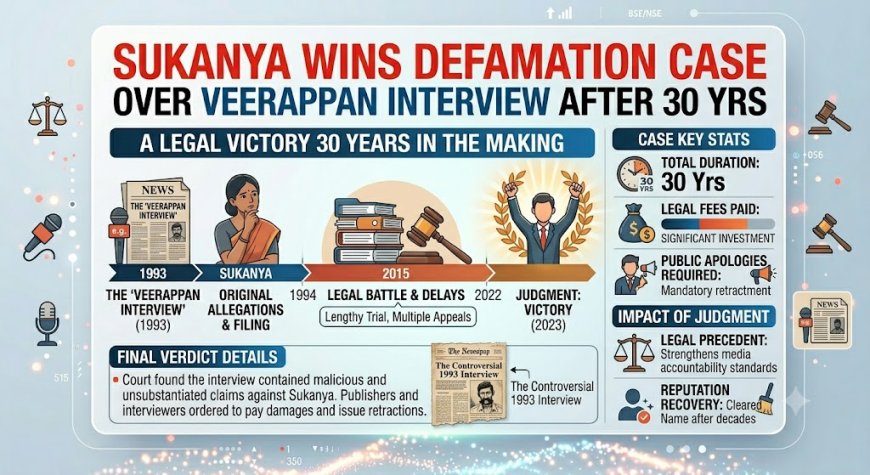
Sukanya Wins Defamation Case Over Veerappan Interview After 30 Yrs
Madras High Court rules in favour of actor Sukanya, orders Sun TV to pay ₹10 lakh in defamation case linked to Veerappan’s 1996 interview.
 Ellofacts
Madras High Court Grants Relief to Actor Sukanya in 30-Year-Old Defamation Case Linked to Veerappan Interview
In a major legal development, the Madras High Court has ruled in favour of actor R. Sukanya, ordering Sun TV Network to pay ₹10 lakh as compensation in a long-standing defamation case connected to a 1996 television interview featuring forest brigand Veerappan.
High Court Upholds Lower Court Decision
The court dismissed an appeal filed by Sun TV Network against an earlier order passed by a Chennai city civil court. Justice K. Kumaresh Babu observed that the television channel was responsible for the broadcast content and had failed in its duty to remove or modify objectionable remarks made during the interview.
The judge further noted that the allegations against the broadcaster were established, particularly regarding negligence in handling sensitive material.
Origin of the Dispute
The case dates back to a 1996 televised interview with Veerappan, which included statements that actor Sukanya later claimed were defamatory. The interview, originally aired by Sun TV Network, became the basis of a prolonged legal battle after the actor objected to the unedited allegations.
Long Legal Battle Concludes
Actor Sukanya had earlier secured a favourable judgment from a lower court in Chennai. The television network challenged this ruling in 2015, but the High Court has now reaffirmed the decision, bringing an end to nearly three decades of litigation.
Court’s Key Findings
The High Court highlighted important responsibilities for broadcasters, including:
-
Ensuring verification of content before telecast
-
Editing or removing defamatory statements from interviews
-
Maintaining accountability while airing sensitive or unverified claims
Importance of the Ruling
The verdict underscores stricter expectations for media organisations when handling archival or controversial content. It also reinforces that failure to exercise editorial responsibility can result in legal consequences, even many years after broadcast.
Disclaimer: This article is a rewritten summary based on publicly available court information.