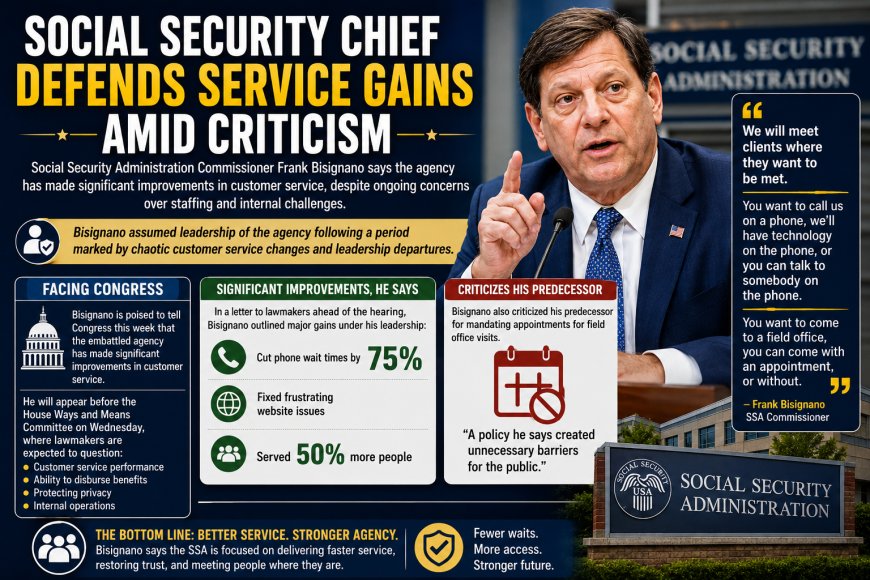
Social Security Administration Commissioner Frank Bisignano is set to defend his leadership before Congress this week, highlighting what he describes as major improvements in customer service since taking charge of the agency. His appearance before the House Ways and Means Committee comes amid ongoing scrutiny from lawmakers and policy experts who argue that the agency’s reported progress may not fully reflect persistent structural challenges.
Bisignano, who assumed office following a turbulent period marked by leadership turnover and widespread criticism over service disruptions, is expected to emphasize key performance gains. According to a letter shared with lawmakers ahead of the hearing, he will report that the SSA has reduced average phone wait times by approximately 75%, improved digital service stability, and increased overall customer reach by nearly 50%. He will also point to upgrades in the agency’s online systems, which he says have helped reduce user frustration and streamline access to benefits.
A central part of his testimony is likely to focus on reversing earlier policies that required strict appointments for in-person visits at field offices. Bisignano has argued that such restrictions limited accessibility, stating that the agency should offer multiple service channels to better meet public needs. “We will meet clients where they want to be met,” he said, noting that beneficiaries should be able to access services by phone, online platforms, or walk-in visits when necessary.
However, critics remain unconvinced by the administration’s optimism. Some lawmakers and advocacy groups argue that improvements in wait times and call handling may mask deeper issues, including staffing shortages, high employee workloads, and concerns about long-term sustainability of service quality. They are expected to question whether the reported gains are driven by temporary operational changes rather than lasting reforms.
The hearing is also expected to address broader concerns about benefit distribution, data privacy safeguards, and the agency’s ability to manage rising demand as the population ages. Lawmakers from both parties are anticipated to press for clearer data on staffing levels and service outcomes across regional offices.
Bisignano’s testimony is likely to become a key moment in the ongoing debate over the future direction of the Social Security Administration, balancing claims of efficiency gains against warnings that underlying operational pressures remain unresolved.

 Ellofacts