Why Xi Jinping Gave Trump Rare Access to China’s Secret Compound

Xi Jinping gave Donald Trump rare access to Zhongnanhai, China’s heavily guarded political compound in Beijing, during a symbolic diplomatic visit.

Why Xi Jinping Gave Trump Rare Access to China’s Secret Compound

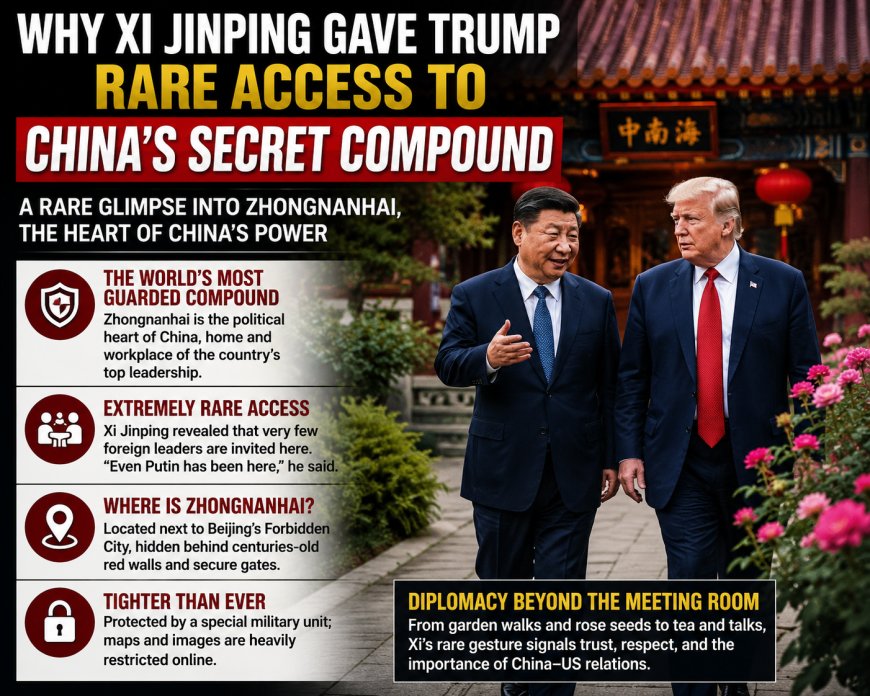
In a highly symbolic diplomatic gesture, Chinese President Xi Jinping offered US President Donald Trump a rare tour inside Zhongnanhai, one of China’s most secretive and politically significant compounds. The exclusive visit took place during the final morning of Trump’s official trip to China and immediately drew global attention because access to the compound is extremely limited, even for world leaders.

Zhongnanhai, located beside the historic Forbidden City in Beijing, serves as both the workplace and residence of China’s top Communist Party leadership. Named after the two lakes situated within the compound, Zhongnanhai is often compared to the White House in the United States or the Kremlin in Russia due to its importance in Chinese politics and governance. However, unlike many other political centres around the world, Zhongnanhai remains largely hidden from public view behind ancient red walls and strict security barriers.

During the visit, Xi Jinping personally guided Donald Trump through the compound’s beautifully maintained gardens, where the two leaders reportedly stopped to admire blooming roses. In a light-hearted moment, Xi even offered to send rose seeds to Trump. The leaders later shared tea and lunch while continuing discussions on bilateral relations, trade, and international cooperation.

Trump reportedly asked Xi whether other foreign leaders had also been invited inside Zhongnanhai. Xi responded that such visits are “extremely rare,” explaining that China traditionally avoided holding diplomatic events within the compound. He noted that only a small number of global leaders, including Russian President Vladimir Putin, had previously been received there.

The rare access granted to Trump was widely interpreted by political analysts as a deliberate signal from Beijing aimed at demonstrating trust, diplomatic respect, and the importance China placed on maintaining strong communication with the United States. Symbolic gestures such as private tours and personal hospitality often carry deep meaning in Chinese diplomacy, especially when involving highly restricted locations tied to state leadership.

Security around Zhongnanhai is considered among the strictest in China. The compound is protected by a special military security unit responsible for safeguarding the country’s senior leadership. Public access is prohibited, and detailed maps or images of the area are heavily restricted online. Because of its secrecy, even glimpses inside Zhongnanhai are rare for international media and foreign officials.

The visit highlighted the carefully managed relationship between the world’s two largest economies during a period of intense geopolitical attention. Analysts believe the invitation was designed not only as a diplomatic courtesy but also as a powerful message about China’s political culture, leadership style, and strategic engagement with the United States.