VIX Fear Gauge Jumps Toward Biggest Gain in Nearly 3 Months
The VIX fear gauge surged toward its biggest gain in nearly three months, crossing key moving averages as investors brace for higher market volatility.
 Ellofacts
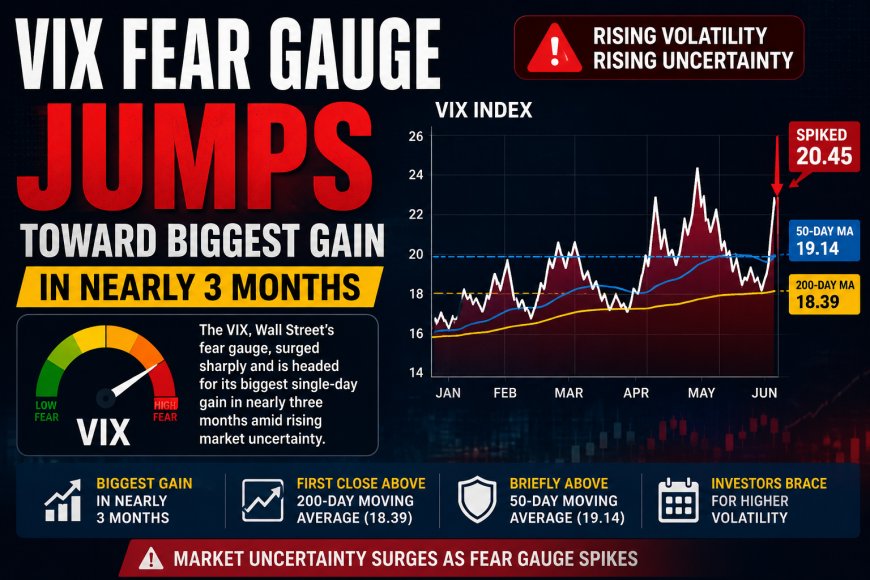
Wall Street’s closely watched fear gauge, the CBOE Volatility Index (VIX), surged sharply and was on track for its biggest single-day gain in nearly three months, reflecting growing investor anxiety amid rising market uncertainty. The spike in the VIX indicates that traders are increasingly seeking protection against potential stock market swings, often a sign that volatility expectations are climbing.
During the trading session, the VIX moved above its 200-day moving average of 18.39, a key technical indicator used by market participants to assess long-term trends. A close above this level would mark the first such occurrence in months and could signal a shift in market sentiment toward a more cautious outlook. The index also briefly climbed above its 50-day moving average of 19.14 before retreating slightly later in the session.
Market analysts often view a sustained move above major moving averages as a sign that investors are becoming more concerned about future market risks. The latest surge in the VIX occurs amid uncertainty surrounding global economic conditions, interest rate expectations, and broader market valuations. As a result, traders are closely monitoring volatility levels for clues about the market's near-term direction.
While a higher VIX does not necessarily predict a market decline, it typically reflects increased demand for options-based hedging strategies. Investors may continue to watch upcoming economic data releases, corporate earnings updates, and policy developments that could influence market sentiment in the coming weeks.
If the VIX maintains its momentum and closes decisively above key resistance levels, it could indicate that market participants are preparing for a period of heightened volatility. For now, the sharp rise in the fear gauge serves as a reminder that investor confidence remains sensitive to emerging economic and financial risks.