
RBI May Sell Gold to Stabilise Rupee Amid West Asia Oil Crisis
RBI may have sold billions in gold to support forex reserves amid West Asia tensions and rising oil prices. Check impact on the rupee, inflation, and the economy.
 Ellofacts
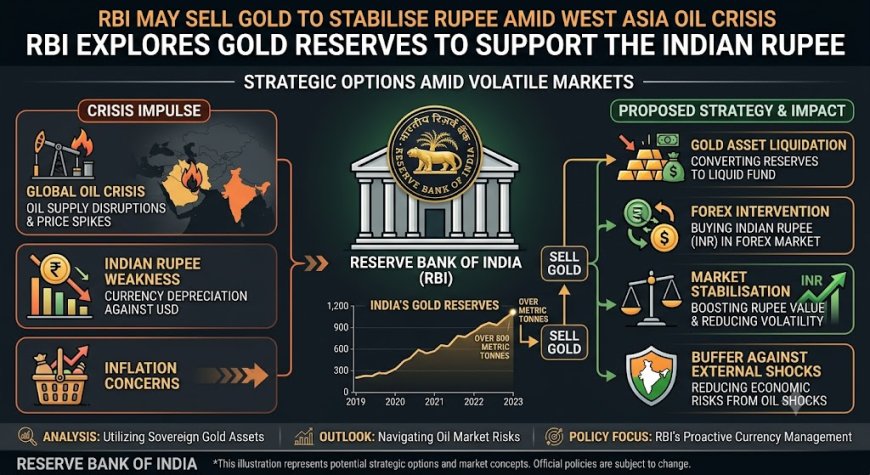
RBI May Use Gold Sales to Stabilise Economy Amid West Asia Oil Shock and Forex Pressure
India’s central bank, the Reserve Bank of India, is reportedly taking strategic steps to protect the country’s financial stability amid rising global uncertainty triggered by tensions in West Asia and surging crude oil prices.
According to analysis cited by Bloomberg Economics, the central bank may have sold gold reserves worth nearly $12 billion within two weeks ending May 22. During the same period, it is also estimated to have purchased around $7.5 billion in foreign currency assets to strengthen its forex position.
This move comes at a time when India is facing increased pressure on its external finances due to higher energy import costs and sustained capital outflows. As global crude oil prices rise, India’s import bill has expanded significantly, adding strain to the current account and weakening the rupee.
Interestingly, the decline in reported gold reserves occurred even after higher import duties on gold were introduced—policies that typically increase bullion valuation. This unusual trend has led analysts to believe that the RBI may have actively reduced its gold holdings while increasing liquid foreign currency reserves.
The central bank’s approach reflects a broader strategy of prioritising liquidity and stability in its foreign exchange reserves. Liquid dollar assets are considered more effective in managing sudden currency volatility compared to gold holdings, especially during periods of global financial stress.
India, being one of the world’s largest oil importers, remains highly sensitive to geopolitical disruptions in energy supply routes, particularly in the Middle East. The ongoing conflict has raised concerns about supply disruptions, especially around critical shipping corridors such as the Strait of Hormuz.
Governor Sanjay Malhotra is reportedly evaluating multiple policy tools to stabilise the rupee, including potential interest rate adjustments and efforts to attract foreign capital inflows. Earlier reports also suggested that the RBI has been actively intervening in forex markets to reduce excessive currency volatility.
These interventions appear to have had some impact, with the Indian rupee showing relative resilience compared to other Asian currencies since its recent record lows. However, it remains under pressure due to rising import costs and global uncertainty.
In addition, the government has taken steps to manage external imbalances, including adjustments in fuel pricing and changes in import duties on precious metals. Regulatory tightening on certain commodity imports is also aimed at controlling outflows and stabilising domestic financial conditions.
Market experts believe that the RBI is likely to continue rebuilding forex reserves whenever global conditions allow, balancing between gold holdings and foreign currency assets, depending on market stability and liquidity needs.
Overall, the central bank’s reported actions highlight the growing complexity of managing India’s economy amid geopolitical tensions, energy shocks, and currency volatility, with policymakers focusing on maintaining long-term financial stability.