Moon Phase Today June 18: Waxing Crescent Explained
Moon phase today on June 18 is Waxing Crescent with 23% illumination. Learn what you can see tonight, lunar features, and viewing tips from NASA data.
 Ellofacts
Moon Phase Today: What the Moon Looks Like on June 18
The Moon continues its gradual return into the night sky following this month’s New Moon phase. As it slowly becomes more visible each evening, skywatchers can already notice a thin, glowing arc forming in the sky. On Thursday, June 18, the Moon is officially in its Waxing Crescent phase, marking the early stage of lunar illumination.
Current Moon Phase: Waxing Crescent
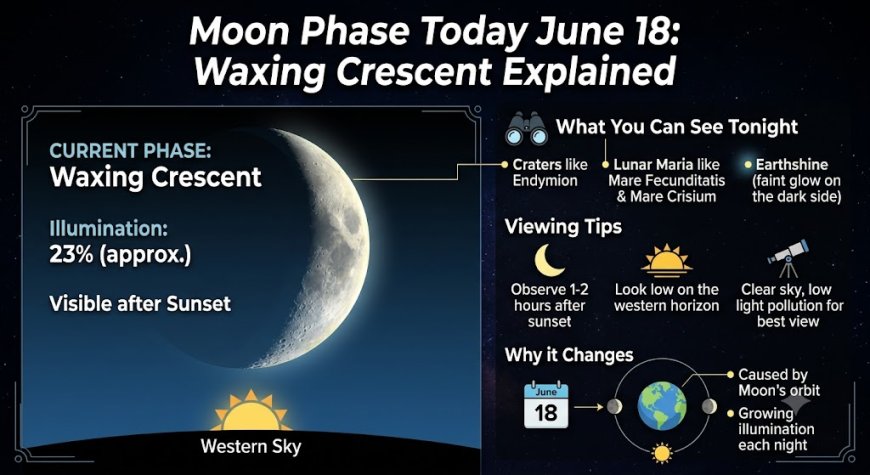
As per NASA’s Daily Moon Guide, the Moon today is in the Waxing Crescent phase, meaning only a small portion of its surface is illuminated by sunlight. Tonight, approximately 23% of the Moon’s surface will be visible from Earth.
During this phase, the Moon appears as a delicate crescent in the western sky just after sunset. It is still relatively faint compared to the brighter phases, but it is becoming more prominent each night as it moves toward the First Quarter phase.
What You Can See Tonight
Even without any special equipment, the naked eye can reveal interesting lunar details. Tonight, observers may be able to spot large lunar plains known as maria, including the Mare Fecunditatis and Mare Crisium. These dark, basaltic regions are some of the most recognizable features on the Moon’s surface.
With the help of binoculars or a small telescope, even more details become visible. One of the highlights tonight includes the Endymion Crater, a large impact crater located in the Moon’s northeastern region. Its wide structure and surrounding terrain make it a fascinating target for amateur astronomers.
Understanding the Waxing Crescent Phase
The Waxing Crescent phase occurs when the Moon is moving from the New Moon stage toward the First Quarter. During this time, the illuminated portion of the Moon gradually increases each night. This phase is often considered one of the best times for early evening moon observation because:
- The Moon is visible shortly after sunset
- Shadows along the surface highlight craters and mountains
- The sky is darker, improving contrast for viewing
Why the Moon Looks Different Each Night
The changing appearance of the Moon is caused by its orbit around Earth. As the Moon moves, the angle between the Sun, Moon, and Earth shifts, changing how much sunlight reflects toward us. This is what creates the familiar lunar cycle, which lasts about 29.5 days.
Each phase reveals different details of the Moon’s surface, making it a constantly changing object of interest for both casual observers and astronomers.
Best Time to View Tonight’s Moon
The Waxing Crescent Moon is best observed:
- Just after sunset
- In the early evening sky
- In areas with minimal light pollution
A clear western horizon will give the best view, as the Moon will appear low in the sky before gradually setting.
Final Thoughts
The Waxing Crescent Moon on June 18 offers a beautiful early glimpse into the lunar cycle. Though only partially illuminated, it reveals key surface features and marks the Moon’s steady journey toward full brightness in the coming days. Whether viewed with the naked eye or through binoculars, tonight’s Moon provides a peaceful and fascinating celestial experience.