Giant 19-Metre Octopus Ruled Ancient Seas, New Study Reveals
A new study reveals giant octopuses up to 19 metres long may have ruled ancient oceans 100 million years ago, challenging beliefs about prehistoric marine predators.
 Ellofacts
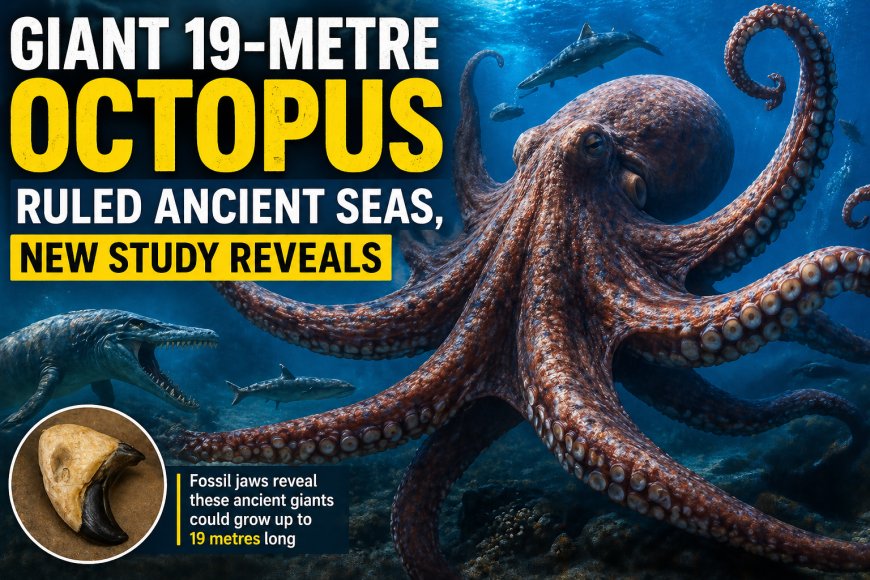
Ancient 19-Metre Giant Octopus May Have Dominated Prehistoric Seas.
New research suggests that विशाल octopuses may have been among the top predators in Earth’s oceans around 100 million years ago, during the age of dinosaurs.
Scientists believe early octopuses were powerful hunters, equipped with strong, flexible arms to पकड़ prey and sharp, beak-like jaws capable of crushing shells and bones. A recent study analysing exceptionally well-preserved fossilised jaws indicates that these creatures could have reached total lengths of up to 19 metres, making them potentially the largest invertebrates ever discovered.
For many years, experts assumed that ancient marine ecosystems were dominated by vertebrates such as large fish and marine reptiles, while invertebrates like octopuses played a lesser role. However, new findings from researchers at Hokkaido University in Japan challenge this long-held belief.
The study reveals that these giant octopuses likely moved gracefully through the oceans and were capable of attacking and consuming large prey, including animals with hard skeletons. Based on fossil evidence, their body length ranged from 1.5 to 4.5 metres, but when including their long arms, their total size could extend between 7 and 19 metres.
Interestingly, the fossilised jaws show uneven wear patterns, suggesting these octopuses may have preferred using one side of their body while feeding. This kind of asymmetry in modern animals is often linked to advanced brain function.
Today’s octopuses are known for their intelligence, problem-solving abilities, and complex hunting behaviours. The largest living species, the Giant Pacific Octopus, can have an arm span exceeding 5.5 metres and has even been observed capturing sharks over a metre long.
According to palaeontologist Christian Klug from the University of Zurich, such powerful tentacles and suction capabilities would have made it nearly impossible for prey to escape these ancient giants.