Dixon Tech Downgraded to Underperform by CLSA
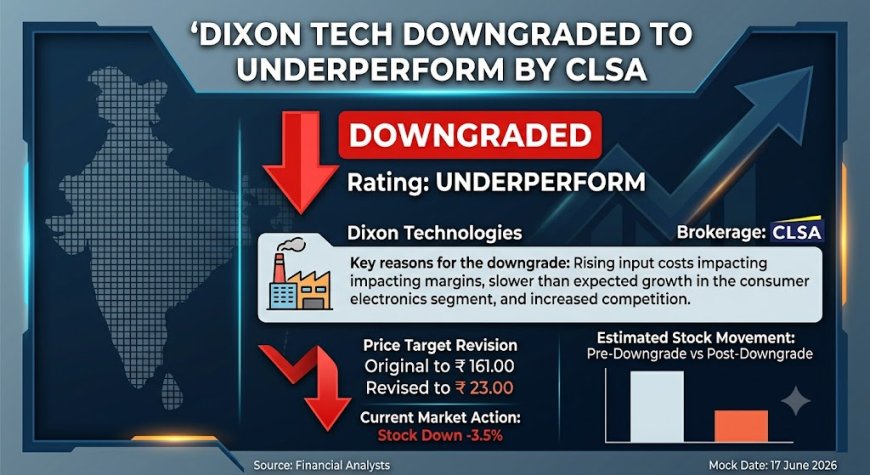
CLSA downgrades Dixon Technologies to Underperform, citing smartphone demand slowdown, memory price pressure, and a 13% downside from current levels.
 Ellofacts
Dixon Technologies Downgraded to Underperform by CLSA Amid Smartphone Market Pressure
Dixon Technologies has been downgraded to “Underperform” by global brokerage CLSA, which believes the recent rally in the stock has significantly outpaced underlying business fundamentals. The brokerage has also set a 12-month target price of ₹10,400, indicating a potential downside of around 13% from current levels.
Stock Rally Driven by Expectations, Not Earnings
According to CLSA, Dixon Technologies has delivered strong short-term gains, rising nearly 15% over the past three months, outperforming broader market indices.
However, the brokerage notes that this rally has been largely driven by investor optimism around:
- Potential approval of the Vivo joint venture
- Expectations from PLI 2.0 incentives for mobile manufacturing
- Strong sentiment in India’s electronics manufacturing sector
CLSA warns that these positives are already largely priced into the stock, leaving limited room for further upside in the near term.
Weak FY27 Outlook Raises Concerns
Despite market optimism, Dixon’s own management commentary has pointed toward a softer outlook for FY27.
CLSA highlights that:
- Organic volume growth is expected to slow down in FY27
- Demand momentum in smartphones may weaken further
- Margin expansion could face pressure from input cost inflation
This mismatch between market expectations and forward guidance is a key reason behind the downgrade.
Smartphone Demand Under Pressure in India
A major concern flagged by CLSA is the sharp slowdown in the smartphone market, especially in India.
Recent trends show:
- Smartphone sales declined 15–20% in May
- Further contraction of over 15% expected in Q2 CY2026
- Weak replacement demand in budget and mid-range segments
India, being a highly price-sensitive market, is particularly vulnerable to rising handset prices.
Global Memory Crunch Adds to Cost Pressure
CLSA attributes the slowdown to a broader structural issue in the global semiconductor ecosystem:
Memory Supercycle Impact
- Global DRAM suppliers are prioritizing AI and server-grade memory chips
- This is causing a supply squeeze in mobile memory components
- The result is rising input costs for smartphone manufacturers
CLSA’s Korea research team notes that this memory upcycle is one of the strongest and most prolonged in recent history, driven by accelerating AI infrastructure demand.
Impact on Smartphone Manufacturing Ecosystem
The ripple effects are being felt across the electronics supply chain:
- Higher memory prices → increased smartphone production cost
- Increased retail prices → weaker consumer demand
- Lower volumes → reduced order flow for EMS companies like Dixon
This creates a dual pressure scenario of rising costs and falling demand.
Outlook for Dixon Technologies
While Dixon remains a key player in India’s electronics manufacturing ecosystem, CLSA believes near-term challenges outweigh structural growth optimism.
Key risks identified:
- Slower smartphone volume growth in India
- Margin pressure from rising input costs
- Overvaluation after recent stock rally
- Delayed impact of new PLI incentives
Conclusion
CLSA’s downgrade reflects growing caution in the EMS sector as global memory shortages and weak smartphone demand begin to impact growth visibility. While long-term structural demand for electronics manufacturing in India remains strong, the brokerage sees limited near-term upside for Dixon Technologies given stretched valuations and softening volume trends.