Trent Shares Drop 33% After Ex-Bonus Adjustment Explained
Trent shares fall 33% after ex-bonus adjustment on June 4. Learn why the price drop is technical and not a loss in value for investors.
 Ellofacts
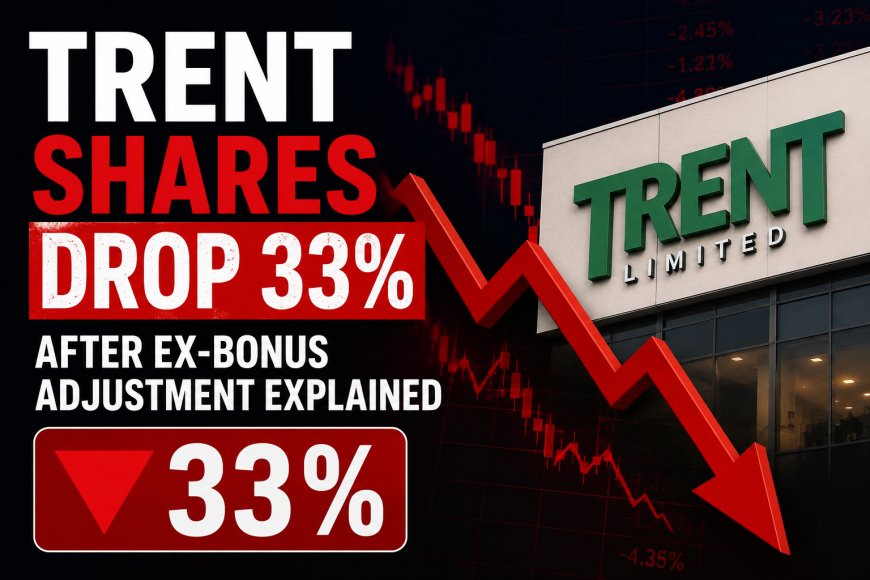
Shares of Trent Ltd witnessed a sharp apparent decline of over 33% on Thursday after the stock turned ex-bonus following its recently announced bonus share issue. The move triggered significant attention in the market, but the fall is purely technical and does not indicate any erosion in the company’s fundamental value.
Why Trent Shares Fell After Ex-Bonus Adjustment
On June 4, Trent shares were quoted around ₹2,830 in pre-market trade, compared to the previous closing price of ₹4,257.60. This sudden drop of nearly 33.5% is directly linked to the stock becoming ex-bonus, rather than any negative business development.
The company had announced a bonus issue in the ratio of 1:2, meaning shareholders will receive one additional share for every two shares held as of the record date. Once a stock turns ex-bonus, its price is mechanically adjusted to reflect the increased number of outstanding shares.
What a Bonus Issue Means for Investors
A bonus issue increases the total number of shares held by investors without changing the overall value of their investment. In simple terms, while the number of shares increases, the price per share adjusts downward proportionally.
For example, after a 1:2 bonus issue:
-
A shareholder holding 2 shares will now hold 3 shares
-
The share price adjusts downward to reflect the higher share count
-
The total portfolio value remains broadly unchanged
This is why the apparent sharp fall in Trent’s stock price is considered a technical adjustment rather than a market crash.
Market Interpretation and Investor Sentiment
Despite the mechanical price adjustment, market sentiment around Trent remains relatively stable. Analysts point out that bonus issues are often interpreted as a sign of strong retained earnings and financial confidence from the company.
Brokerage commentary, including from HSBC Holdings plc, has remained broadly optimistic. HSBC continues to maintain a bullish outlook, suggesting potential upside based on Trent’s long-term growth trajectory and retail sector strength.
Key Takeaway
-
The 33% drop is not a loss in value
-
It is a bonus share adjustment effect
-
Investor holdings remain fundamentally unchanged in value
-
Long-term outlook is still driven by business performance, not short-term price adjustments
Overall, the movement in Trent’s stock is a classic example of how corporate actions like bonus issues can temporarily distort price charts while leaving underlying investor wealth intact.