Vijay's TVK Madurai Rally Electrifies Tamil Nadu Politics
Vijay’s TVK Madurai rally draws massive crowds, sparking political momentum in Tamil Nadu and fueling speculation about his CM ambitions.
 Ellofacts
Introduction
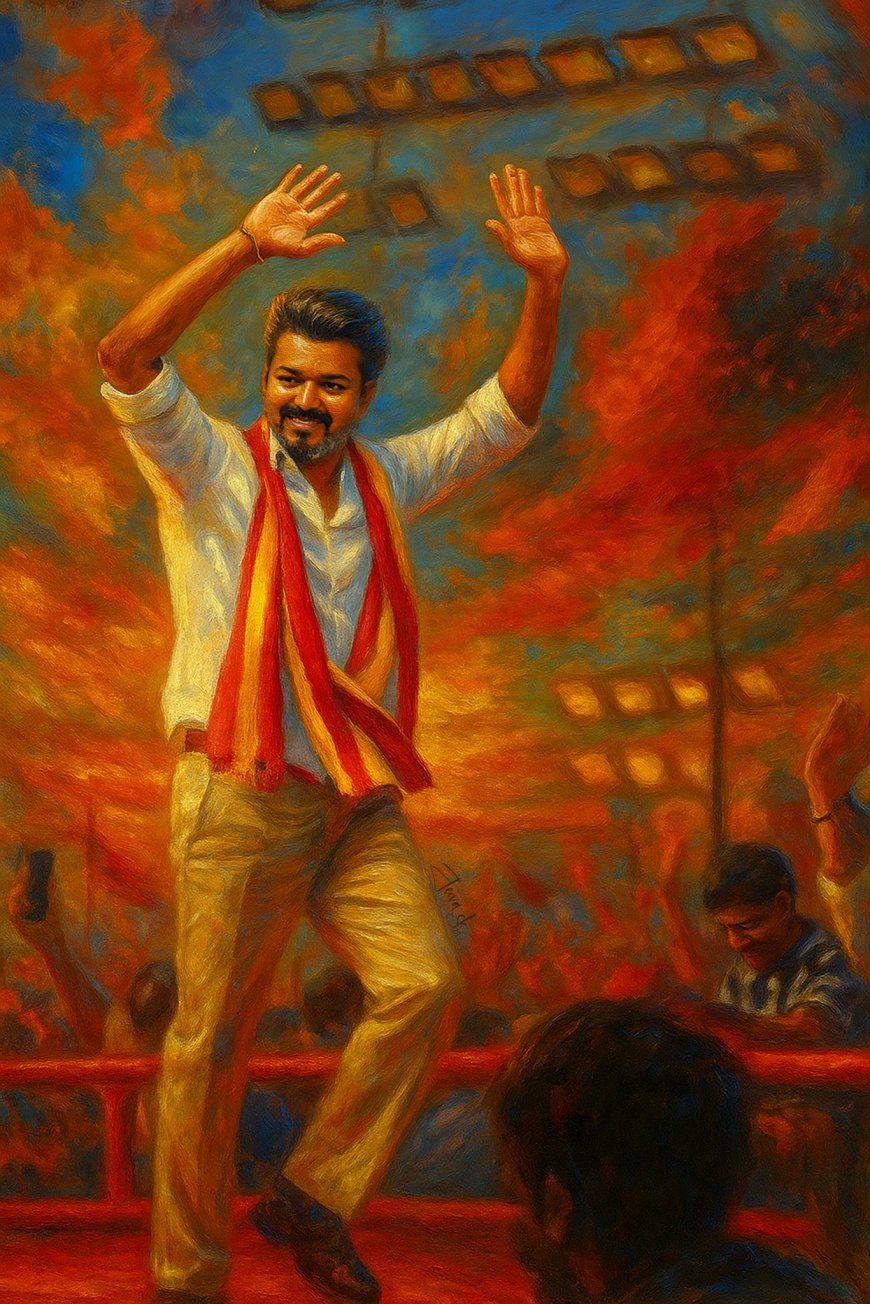
Tamil Nadu politics has always been a vibrant space, deeply influenced by cinema, culture, and strong regional ideologies. Adding to this tradition, popular actor Vijay, fondly known as Thalapathy, has taken a bold step into politics with his party Tamizhaga Vettri Kazhagam (TVK). His recent rally in Madurai not only drew massive crowds but also set the stage for what many see as a possible transformation in the state’s political future.
History and Background
Tamil Nadu has a unique political history where actors such as M.G. Ramachandran (MGR) and J. Jayalalithaa rose from cinema to power. Vijay’s decision to enter politics reflects this legacy. Known for his strong fan base and films that often carry social messages, his move into politics seemed inevitable. The Madurai rally, attended by thousands, demonstrated the strength of his following and the seriousness of TVK’s entry into Tamil Nadu’s political landscape.
Why Vijay Held the Rally and Party Meeting
The rally in Madurai was not just a gathering but a symbolic declaration. Madurai, considered a political stronghold in Tamil Nadu, was chosen for its cultural and electoral significance. By hosting the rally there, Vijay sent a clear message of his intent to connect with grassroots voters and challenge existing political giants.
Can Vijay Become the Future Chief Minister of Tamil Nadu?
Speculation about Vijay as a future Chief Minister is gaining momentum. With his popularity across age groups, especially the youth, Vijay has the potential to influence electoral dynamics. However, transitioning from a beloved actor to a political leader requires patience, consistent strategies, and strong alliances. If he continues to build his base and prove his leadership skills, a future CM role cannot be ruled out.
Party Vision, Work, and Strategies
TVK has positioned itself as a people’s party focusing on transparency, corruption-free governance, employment generation, and education. Vijay’s brand of leadership is built around accessibility and simplicity, which appeals to first-time voters and youth frustrated with traditional politics.
Important and Significant Factors
-
Mass fan base – His cinema career has created a ready-made cadre of supporters.
-
Youth power – His vision strongly resonates with the younger generation.
-
Anti-incumbency sentiments – Discontent against existing parties could play in his favor.
-
Cultural influence – Tamil Nadu’s film-politics connection gives him an advantage.
Advantages and Disadvantages
Advantages:
-
Charismatic leader with mass appeal.
-
Ability to mobilize youth and first-time voters.
-
Clean public image compared to traditional politicians.
Disadvantages:
-
Lack of administrative experience.
-
Risk of being seen as another “film star politician.”
-
High expectations from supporters that may be difficult to meet quickly.
Positives and Negatives
Positives: TVK’s emergence brings fresh energy, provides an alternative to traditional Dravidian politics, and sparks hope for change.
Negatives: Questions remain about policy depth, governance expertise, and the ability to sustain momentum beyond rallies.
Final Thoughts and Conclusion
Vijay’s Madurai rally has electrified Tamil Nadu’s political scene, signaling that a new chapter may be unfolding. While his popularity is undeniable, translating it into political victories will require careful strategy, grassroots organization, and policy clarity. Whether he becomes Tamil Nadu’s Chief Minister in the future remains uncertain, but one fact is clear—Vijay has firmly entered the political battlefield, and his journey will be one of the most closely watched stories in the coming years.
Vijay’s move into politics is not just about a star entering the field; it represents a generational shift where youth aspirations and public sentiment may redefine Tamil Nadu’s future.