Brent Oil Hits $113 Amid Middle East Supply Crisis
Brent crude crosses $113 as Middle East tensions disrupt supply. Falling inventories and the Hormuz crisis push oil prices higher globally.
 Ellofacts
Brent Breaks $113 as Traders Brace for Prolonged Supply Disruptions
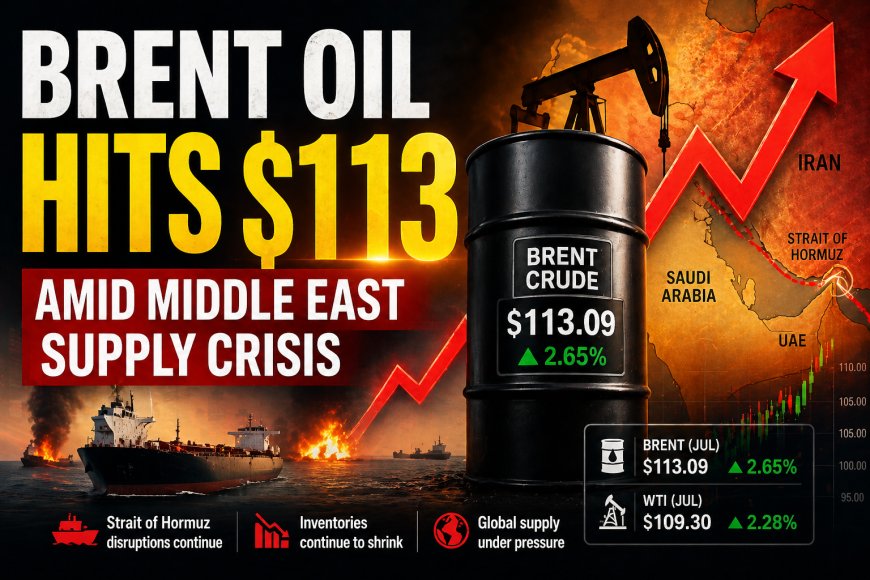
Oil prices surged in early Asian trading on Thursday, as markets reacted to escalating geopolitical tensions and tightening global supply. The benchmark Brent crude for July delivery climbed to $113.09, marking a 2.65% increase, while West Texas Intermediate (WTI) rose 2.28% to $109.30.
Notably, the expiring front-month Brent contract crossed $121, signalling severe tightness in immediate supply and heightened demand pressure in global energy markets.
Middle East Tensions Drive Market Volatility
The latest rally is largely driven by ongoing disruptions in the Middle East, particularly around the Strait of Hormuz, a critical global oil transit route. Diplomatic efforts to reopen the strait have failed, while tensions continue to escalate between the U.S. and Iran.
Recent developments include:
- Increased U.S. military presence in the region
- Restrictions on non-Iranian shipping by Tehran
- Blockades on Iranian-linked vessels by Washington
These factors have significantly reduced oil flows, creating fears of prolonged supply shortages.
Market Signals Point to Long-Term Disruption
Adding to market concerns, former U.S. President Donald Trump recently met with oil industry leaders, signalling that the conflict could persist for months. This has reinforced trader expectations of sustained volatility and limited near-term relief.
The International Energy Agency (IEA) has described the situation as one of the most severe energy crises in modern history, highlighting the scale of disruption.
Inventory Declines Add Upward Pressure
Supply concerns are further intensified by declining inventories. According to the U.S. Energy Information Administration (EIA):
- Crude oil stockpiles have dropped sharply
- Gasoline inventories are also declining
This tightening supply-demand balance is pushing prices higher across global markets.
OPEC+ Output Increase Falls Short
Meanwhile, OPEC+ is expected to announce a modest production increase of around 188,000 barrels per day in its upcoming meeting. However, this is unlikely to offset current supply disruptions.
In a major development, the United Arab Emirates (UAE) has confirmed its exit from OPEC+ effective May 1. While the short-term impact may be limited due to production constraints, the move could reshape global oil dynamics in the medium to long term.
What Lies Ahead for Oil Prices?
In the near term, oil prices are expected to remain elevated due to:
- Ongoing geopolitical tensions
- Restricted supply routes
- Falling global inventories
If the crisis intensifies further—particularly with potential disruptions in key routes like the Bab el-Mandeb Strait—prices could surge even higher.
Conclusion
The global oil market is entering a period of heightened uncertainty, driven by geopolitical conflict and supply constraints. With no immediate resolution in sight, traders are bracing for sustained volatility and continued upward pressure on prices.