Total Lunar Eclipse March 2026: Date, Time & Live Updates
Watch the total lunar eclipse on March 3, 2026. Check date, time, visibility, live updates, and blood moon viewing details across North America.
 Ellofacts
Total Lunar Eclipse March 2026: Live Updates, Date, Time, Visibility & What to Expect
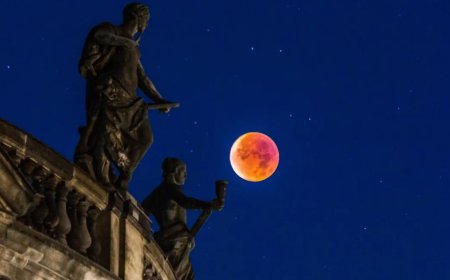
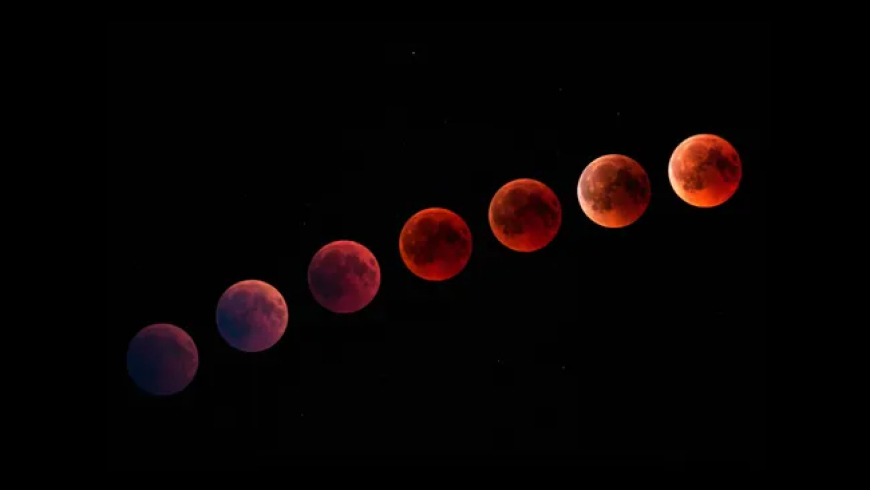
Skywatchers around the world are gearing up for a spectacular celestial event — the total lunar eclipse on March 3, 2026, which will be the first lunar eclipse of the year. This rare astronomical phenomenon promises stunning visuals as the Moon transforms into a glowing red orb, commonly known as the “Blood Moon.”
What Makes This Eclipse Special?
The March 2026 eclipse is particularly significant as it will be the last total lunar eclipse visible anywhere on Earth until the New Year’s Eve 2028–2029 eclipse. For astronomy enthusiasts, this makes it a must-watch event.
Where Will It Be Visible?
The total lunar eclipse will be clearly visible across North America, including the United States, Canada, and Mexico. Partial visibility may also extend to parts of Central America, South America, and the Pacific region, depending on local time zones and weather conditions.
Timing & Duration
The entire event, from the initial penumbral phase to the final partial phase, will last several hours. The most dramatic moment — totality — will occur when the Moon is completely immersed in Earth’s shadow, producing the iconic red colour that can be seen with the naked eye.
Why Does the Moon Turn Red?
During a total lunar eclipse, sunlight passes through Earth’s atmosphere and bends toward the Moon. The atmosphere filters out shorter blue wavelengths, allowing longer red wavelengths to dominate, giving the Moon its distinctive copper-red glow — hence the name Blood Moon.
How to Watch Safely
Unlike solar eclipses, lunar eclipses are completely safe to observe without any protective eyewear. Viewers can enjoy the event with the naked eye, binoculars, or telescopes for enhanced details.
Astronomical Significance
Total lunar eclipses provide scientists and astronomers with valuable opportunities to study Earth’s atmosphere, lunar surface properties, and light refraction. They also inspire global interest in astronomy and sky observation.
Live Updates & Streaming
Several space agencies and astronomy organisations are expected to offer live streams and real-time updates, enabling viewers worldwide to experience the eclipse even if it isn’t visible from their location.