Trump: US-Israel Iran War "Very Complete" & Ending Soon Amid New Supreme Leader
#IranWar #IranIsraelWar #USIranWar #IranIsraelUSWar #IranWar #USIranWar #IranIsraelWar #TrumpIran #MojtabaKhamenei #WorldWarIII #StraitOfHormuz #EpicFury #TehranStrikes #FreeIran
 Ellofacts
0
66
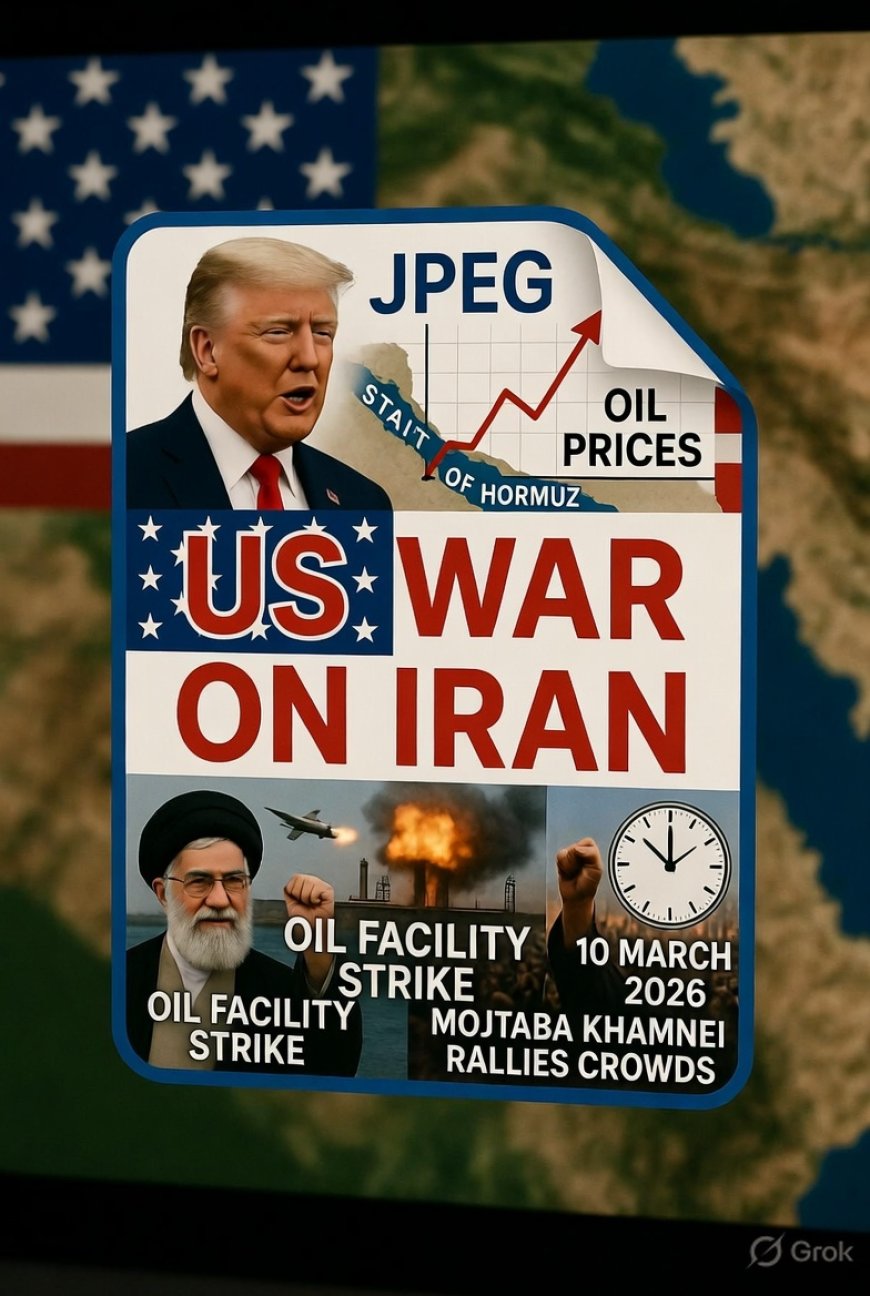
The US-Israel War on Iran: Day 10 Update – Trump's Mixed Signals, New Supreme Leader, and Escalating StakesAs of March 10, 2026, the joint US-Israeli military campaign against Iran has entered its 10th day, marking one of the most intense and rapidly evolving conflicts in the Middle East in recent history. What began with targeted airstrikes on February 28—resulting in the death of Supreme Leader Ayatollah Ali Khamenei—has expanded into sustained air operations targeting Iran's military infrastructure, missile sites, drone facilities, and now energy assets. The war has already caused significant casualties, disrupted global oil markets, and raised fears of broader regional instability.Trump's Conflicting Messages on the War's TimelineUS President Donald Trump has dominated headlines with seemingly contradictory statements about the conflict's progress and endgame.In a CBS News interview, Trump described the war as "very complete, pretty much," claiming Iran has lost its navy, communications, and air force capabilities. He emphasized that the US is "very far ahead of schedule" compared to initial estimates of 4-6 weeks, suggesting the operation could wrap up "very soon" — though he stopped short of specifying days or weeks.However, in later remarks to reporters and during a House GOP conference, Trump struck a more belligerent tone. He warned that if Iran disrupts oil flows through the Strait of Hormuz — a critical global chokepoint — the US would respond "twenty times harder" or with "much, much harder" strikes. He also noted that while many objectives are met (including over 3,000-5,000 airstrikes), "we haven’t won enough" yet, and some targets are being left "for later."These mixed signals have influenced markets: Oil prices briefly spiked above $119 per barrel before falling on hopes of a quick resolution, though they remain elevated around $100+ levels — the highest since 2022.Iran's Leadership Transition: Mojtaba Khamenei Takes OverIn a major development, Iran's Assembly of Experts has appointed Mojtaba Khamenei, the 55-56-year-old son of the late Ayatollah Ali Khamenei, as the new Supreme Leader. This marks the first dynastic succession in the Islamic Republic since the 1979 Revolution.Mojtaba, long seen as a shadowy but influential figure behind the scenes (often linked to the IRGC and accused of human rights issues), has received pledges of allegiance from the Islamic Revolutionary Guard Corps (IRGC). Large crowds have rallied in support across Iran, projecting defiance amid the war.Trump has dismissed the appointment, calling it "unacceptable" and suggesting the new leader "is not going to last long" without US approval. Iranian officials, including Foreign Minister Abbas Araghchi, have ruled out future negotiations with the US after what they call a "bitter experience," vowing to continue resistance and warning of more "surprises."Ongoing Military Actions and Regional Spillover
- US-Israel strikes have degraded Iran's missile/drone launchers, underground facilities (e.g., Esfahan Missile Complex), and IRGC drone bases. Recent targets include oil production/storage in Tehran and command centers.
- Iran's responses involve missile/drone waves targeting Israel and Gulf states (Bahrain, Kuwait, Saudi Arabia, UAE, Qatar), with many intercepted. Attacks on Gulf oil infrastructure (e.g., Bapco refinery in Bahrain) have occurred, though Iran's capabilities appear limited compared to early days.
- Hezbollah in Lebanon is expected to ramp up rocket/drone attacks on northern Israel to divert attention.
- Casualties: Over 1,200 reported in Iran (military and civilian); US has confirmed losses (e.g., 3 service members earlier, more possible); strikes continue despite reduced Iranian retaliation frequency.