OpenAI GPT-5.5 Launched: New AI Model Excels in Agentic Coding & Automation
OpenAI GPT-5.5 Launched: New AI Model Excels in Agentic Coding & Automation
OpenAI unveils GPT-5.5, a powerful new AI model designed for agentic coding and automation. Discover its features, safety upgrades, and how it compares with rivals like Anthropic.
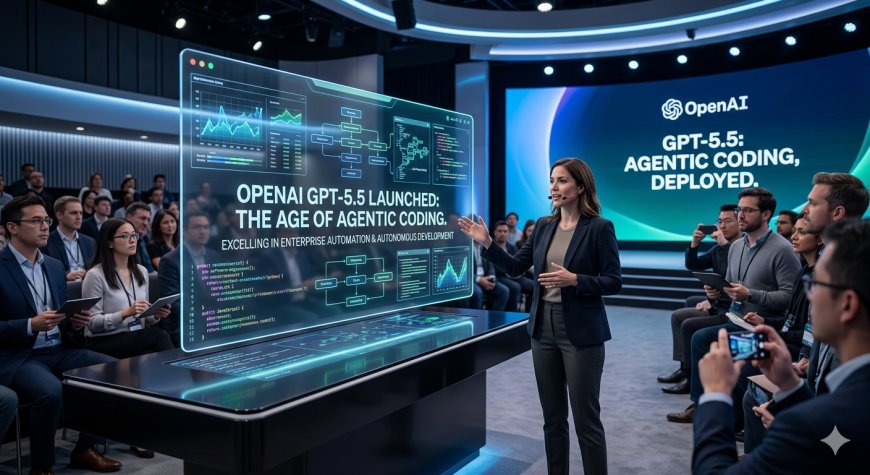
OpenAI has introduced its latest model, GPT-5.5, describing it as a “new class of intelligence” that builds significantly on the capabilities of its predecessor, released just months earlier.
The new model is especially strong in “agentic” tasks—particularly coding and computer-based workflows—where AI systems can independently carry out complex instructions. This marks a shift toward digital assistants that don’t just respond, but actively execute multi-step tasks with minimal human input.
According to Greg Brockman, GPT-5.5 represents a foundational step in reshaping how people interact with computers. He noted that the model signals a future where AI handles much of the operational workload, allowing users to focus on higher-level direction.
OpenAI’s Chief Research Officer, Mark Chen, emphasised that in the near term, humans will act as “orchestrators,” guiding AI systems that perform the heavy lifting across tasks like coding, automation, and analysis.
The company also highlighted enhanced safety measures in GPT-5.5, stating that it includes its strongest safeguards yet—particularly to limit misuse in sensitive areas such as cybersecurity and biological domains. As part of this, the model is more likely to refuse requests with potentially harmful cyber activities.
Meanwhile, competitor Anthropic is taking a cautious approach with its own advanced AI system, Claude Mythos. Reports suggest the model is highly capable of identifying software vulnerabilities, raising concerns about potential misuse by malicious actors. As a result, its release has been restricted to select major technology firms, giving them time to strengthen their defences.
Reflecting on the rapid pace of development, Brockman acknowledged that the growing number of AI model launches may soon make it difficult to distinguish between them, underscoring just how quickly the field is evolving.

 Ellofacts