India Launches Nationwide HPV Vaccination Drive for Girls
India rolls out a nationwide HPV vaccination programme for 14-year-old girls to prevent cervical cancer and strengthen public health protection.
 Ellofacts
A Timely Shot: India’s Nationwide HPV Vaccination Initiative
India’s decision to roll out a nationwide Human Papillomavirus (HPV) vaccination programme for 14-year-old girls marks a powerful endorsement of science and public health, especially at a time when vaccine scepticism is gaining traction globally.
This move underscores the country’s commitment to preventive healthcare and reflects lessons learned from international experiences, including the resurgence of measles in several parts of the United States due to declining immunisation coverage.
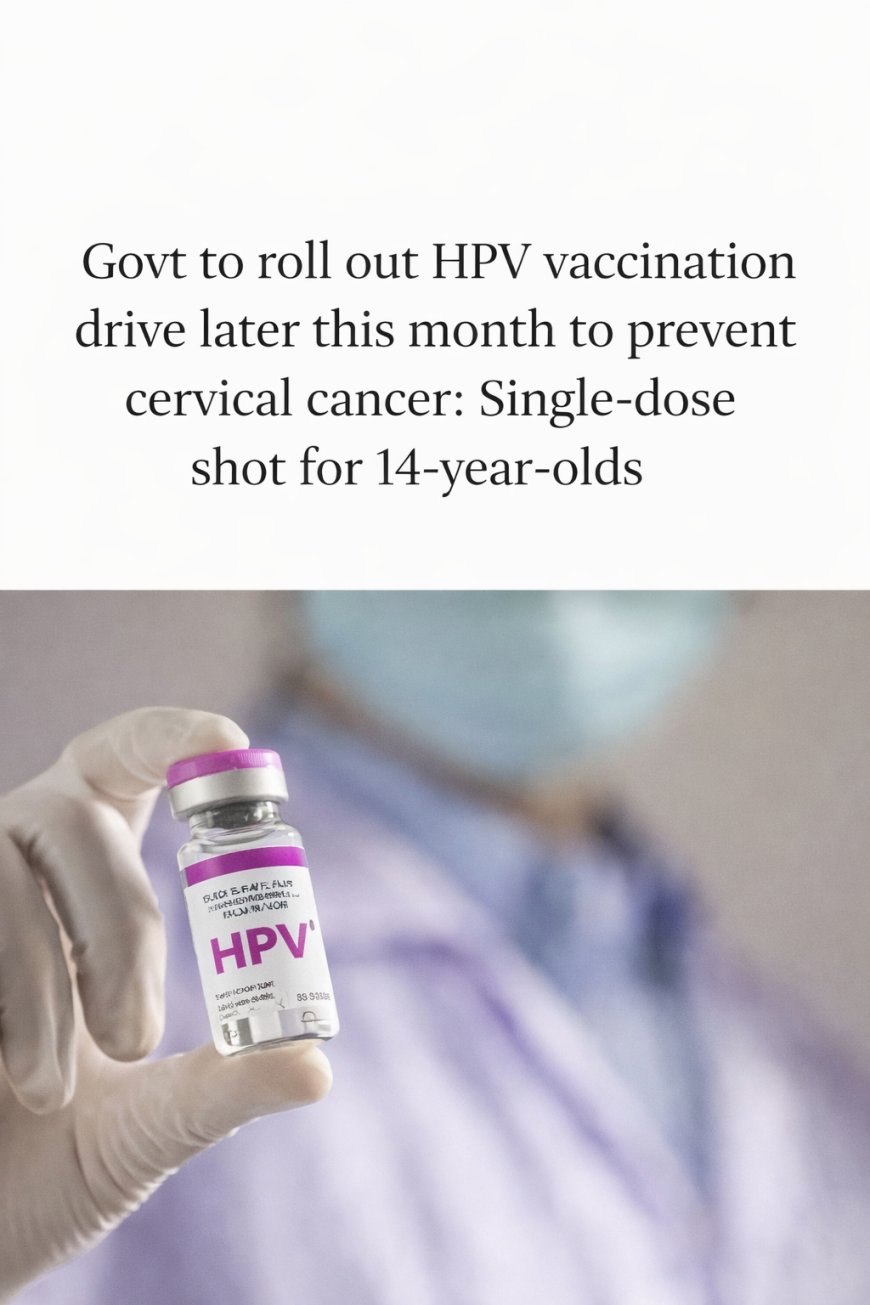
The programme will be implemented exclusively through government health centres, under the supervision of trained medical professionals. Each vaccination session will be supported by skilled healthcare staff and equipped to manage any adverse events following immunisation (AEFI). Following the World Health Organisation’s recommendation, India will adopt a single-dose vaccination schedule, which has been shown to offer effective protection while simplifying logistics and increasing compliance.
Scientific evidence strongly links nearly all cases of cervical cancer to persistent infection with high-risk strains of HPV, particularly types 16 and 18, which together account for more than 80% of cervical cancer cases in India. Studies worldwide confirm that timely vaccination and routine screening can significantly reduce the incidence of pre-cancerous lesions and cervical cancer, and ensure successful treatment if detected early. Over 90 countries have already introduced single-dose HPV vaccination programmes, many reporting substantial declines in infection rates and disease burden.
The urgency of this initiative becomes clear when considering India’s cervical cancer statistics. The South-East Asia region records one of the highest global incidences and mortality rates, with India contributing more than 65% of the total burden. In 2022 alone, the country recorded over 1.27 lakh new cases and nearly 80,000 deaths from cervical cancer. Meanwhile, screening levels remain critically low, with less than 2% of women aged 30–49 undergoing routine testing.
However, the programme also carries the weight of past concerns. During HPV vaccine trials conducted in Andhra Pradesh and Gujarat between 2009 and 2010, the deaths of seven participating girls raised serious questions. Although investigations by the Indian Council of Medical Research concluded that the fatalities were likely unrelated to the vaccine, they emphasised the importance of robust monitoring systems and transparent reporting of adverse events.
As India embarks on this large-scale immunisation drive, ensuring strong cold-chain management, transparent communication, and rigorous AEFI surveillance will be crucial. With careful implementation and public trust, this initiative holds the potential to save thousands of lives and significantly reduce the country’s cervical cancer burden.