Jack Dorsey Cuts Block Staff by Half, Stock Jumps 24%
Jack Dorsey slashes Block’s workforce by nearly 50%, citing AI-driven efficiency. Investors cheer as shares surge 24% in after-hours trading.
 Ellofacts
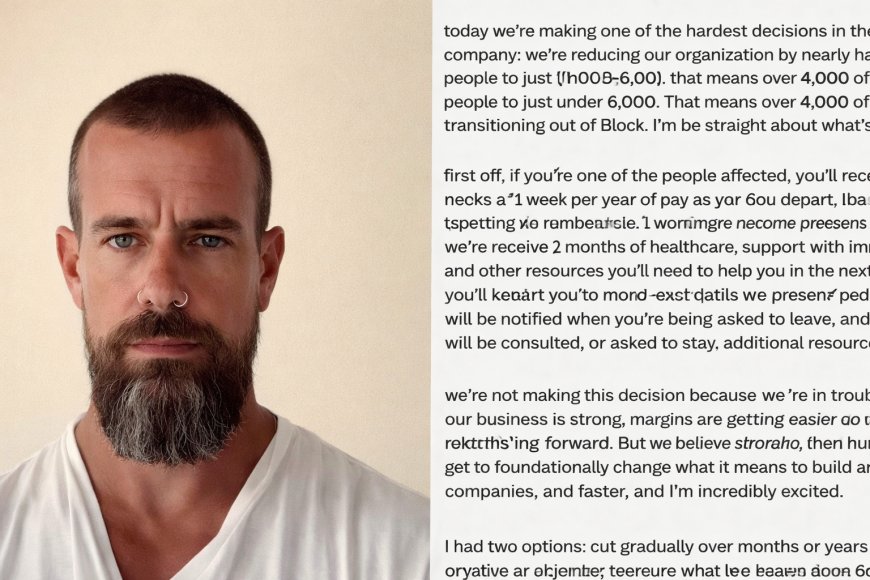
Jack Dorsey Cuts Block Workforce by Nearly Half, Echoing Elon Musk’s Radical Playbook
San Francisco — Jack Dorsey, the founder and CEO of Block, has announced one of the largest workforce reductions in recent tech industry history, eliminating more than 4,000 jobs, nearly half of the company’s global staff. The decision shrinks Block’s workforce from over 10,000 employees to just under 6,000.
The market responded swiftly and positively, with Block’s stock surging more than 24% in after-hours trading, signalling strong investor support for the aggressive cost-cutting strategy.
Dorsey, a long-time admirer of Elon Musk, is following a similar leadership approach. In 2022, Musk dramatically cut about 50% of Twitter’s workforce after acquiring the company, later rebranding it as X. That bold move disrupted long-standing norms in Silicon Valley and redefined how deeply CEOs could restructure organisations in a single move.
Dorsey observed the transformation from a unique vantage point. Instead of cashing out, he rolled his 2.4% stake in Twitter into Musk’s acquisition, becoming one of the largest outside investors in what later became X
A Complex Relationship Between Two Tech Titans
The relationship between Dorsey and Musk has long been marked by admiration, disagreement, and public debate. While Dorsey strongly supported Musk’s takeover of Twitter, he later remarked that Musk “should have walked away.” At the same time, Dorsey helped launch Bluesky, a decentralised social media alternative, before stepping away from its board and later referring to X as a form of “freedom technology.”
Both executives also share a strong belief in cryptocurrency, particularly Bitcoin. Block and Tesla are among the few major corporations that hold Bitcoin as part of their corporate treasury strategy.
Strategic Cuts, Not Financial Distress
Dorsey emphasised that a financial crisis did not drive the decision, but rather long-term strategic planning. He argued that repeated waves of layoffs hurt morale, productivity, and trust, and that acting decisively allows companies to reset faster.
“Multiple rounds of job cuts damage focus and weaken confidence in leadership,” Dorsey said in a post.
He also predicted that most companies will arrive at similar workforce levels within a year, as businesses rethink staffing needs in the age of automation and artificial intelligence.
AI Driving the Corporate Reset
According to Block’s Chief Financial Officer, Amrita Ahuja, the workforce reduction is closely tied to the company’s increasing adoption of artificial intelligence technologies. The restructuring aims to enable smaller teams to achieve higher productivity by automating tasks traditionally handled by humans.
“Smaller, highly skilled teams empowered by AI will allow us to move faster and operate more efficiently,” Ahuja said, adding that automation will reshape how work is done across the company.
Block operates several major digital platforms, including Square, Cash App, and Tidal, all of which are expected to undergo operational streamlining.
A Sign of What’s Coming?
Dorsey’s sweeping action could signal a broader shift in how companies structure their workforces. As AI tools become more advanced, executives may increasingly prioritise efficiency, automation, and profitability over traditional growth-through-hiring strategies.
While investors appear pleased, critics argue that large-scale job cuts place an enormous burden on workers and communities. For the thousands of employees impacted, the restructuring represents a life-changing disruption.
Still, Dorsey’s move underscores a growing belief among tech leaders: leaner organisations, powered by automation and AI, may soon become the industry standard.