India–US Trade Deal 2026: Tariffs on Indian Exports Cut to 18%
India and the United States have agreed to a new trade deal reducing tariffs on Indian exports to 18% from 50%. The deal removes US penalties and makes Indian products more competitive in the US market. India will also eliminate tariffs on US goods.
 Ellofacts
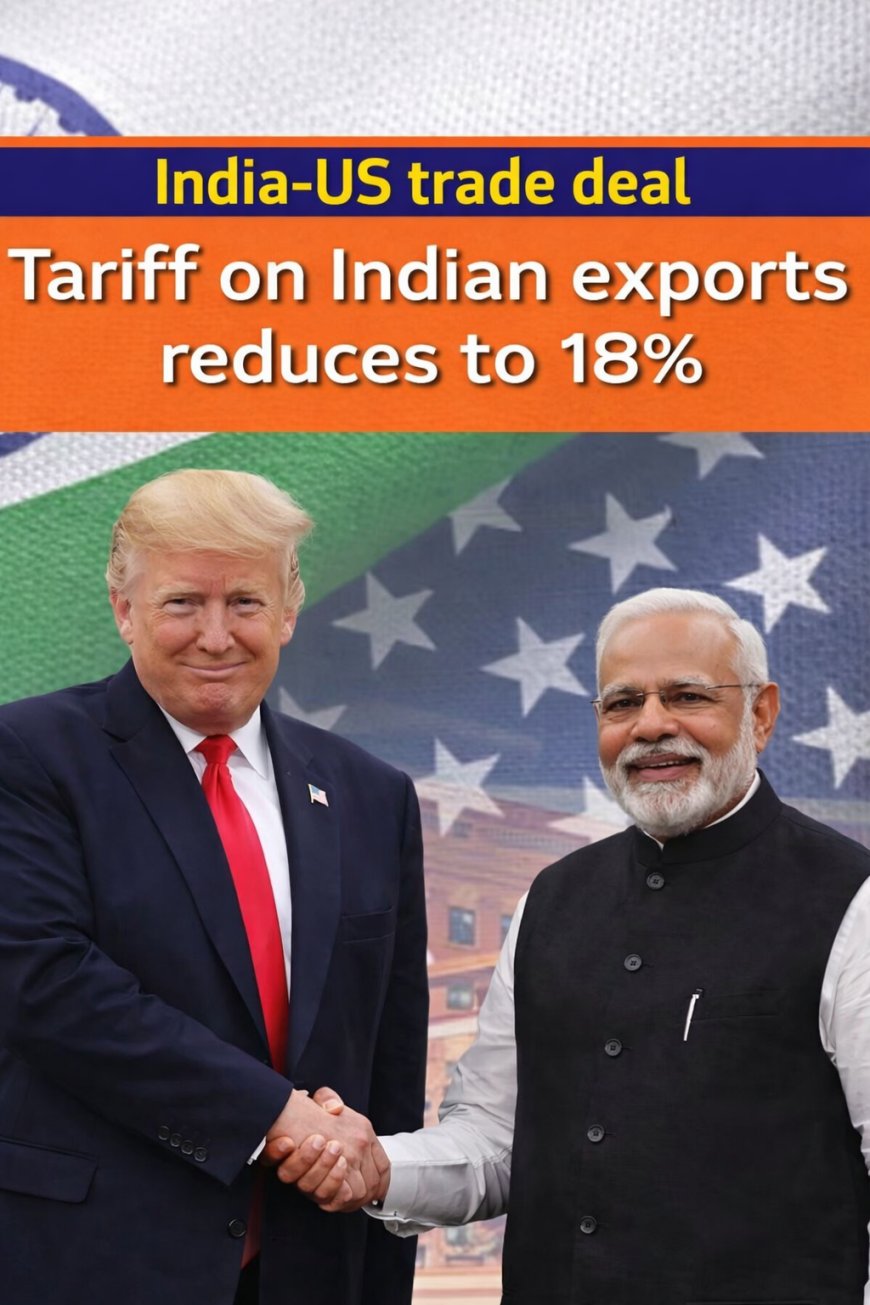
India–US Trade Deal: Tariffs on Indian Exports Slashed to 18%
In a major trade breakthrough, India and the United States have agreed on a new trade arrangement that significantly lowers tariffs on Indian goods entering the US market. Under the deal announced by US President Donald Trump, the tariff on Indian exports has been cut to 18 per cent, down from an effective 50 per cent rate previously in place.
What Changed?
The earlier high tariff was a combination of:
* A 25 per cent reciprocal tariff, and
* An additional 25 per cent penalty linked to India’s continued purchases of Russian crude oil.
In the new agreement, the penalty component has been removed and the reciprocal tariff reduced, bringing the total duty burden for Indian exports down to 18 per cent.
Strategic and Economic Impacts
Better Global Positioning
With the revised tariff structure, Indian products become significantly more competitive in the US market. India now faces lower tariff rates than many of its regional peers, such as Bangladesh (20 per cent), Vietnam (20 per cent), Indonesia and Pakistan (around 19 per cent). This gives Indian exporters a competitive edge over several countries in Southeast Asia and beyond.
Trade with the United States
As part of the deal, India has agreed to reduce its own tariffs and non‑tariff barriers on US products to zero, removing import duties and opening wider access for American goods.
Russian Oil and Broader Diplomacy
The tariff rollback was linked to India’s commitment to **halt purchases of Russian crude oil**, a point highlighted by US officials in outlining the deal. This move reduces trade tensions and aligns the two countries on key geopolitical fronts.
Competitive Landscape
Under the new structure, India’s tariff rate is now more favourable compared with several other major trading partners:
* China: ~34–37 per cent
* Vietnam & Bangladesh:~19–20 per cent
* European Union, Japan, South Korea: ~15 per cent
* United Kingdom:~10 per cent
India’s lowered rate positions it ahead of neighbouring exporters to the US and enhances its export prospects.
Market & Industry Reaction
Indian financial markets responded positively to the news of tariff relief, with stocks in export‑oriented sectors such as textiles and manufacturing surging and the Indian rupee strengthening.
Broader Implications
Analysts suggest the deal not only boosts trade but also marks a reset in bilateral economic relations, easing months of disputes and tariff tensions between the two largest democracies. It is expected to enhance export competitiveness, attract investment, and deepen trade ties.
Why It Matters
The India–US trade deal brings a welcome reduction in tariffs on Indian exports to the US from 50 per cent to 18 per cent, removes punitive levies, and opens up new opportunities for Indian products in the world’s largest consumer market. At the same time, India has committed to eliminating tariffs on US imports, strengthening bilateral commercial engagement.