
Modi Pushes India’s Self-Reliance Amid US Tariff Threats
Prime Minister Narendra Modi’s latest budget outlines a strategy to shield India from US tariffs while strengthening key sectors like semiconductors, rare earths, and pharmaceuticals. The plan emphasizes self-reliance, infrastructure investment, and defense spending, alongside new trade agreements with the EU, UK, and New Zealand. Analysts remain cautious about growth prospects and job creation for India’s young population.
 Ellofacts
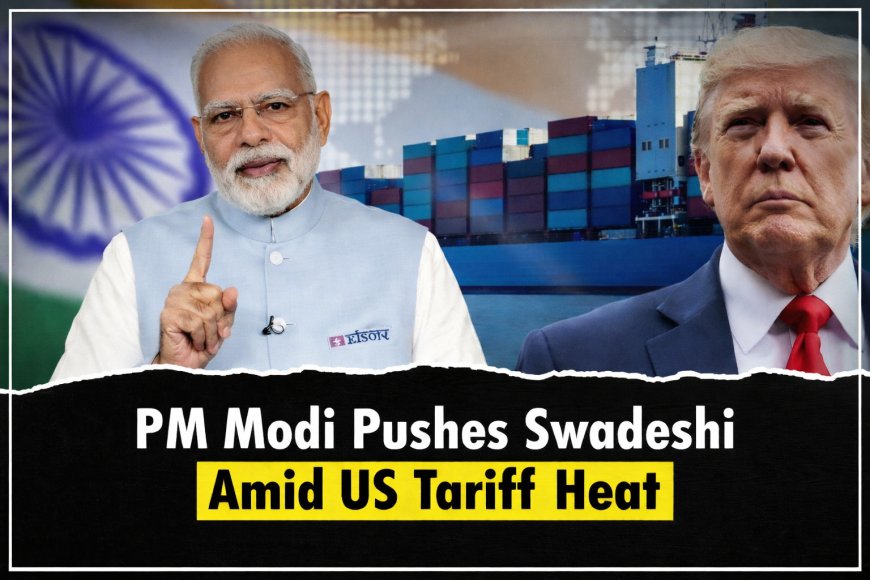
Prime Minister Narendra Modi is sharpening India’s economic strategy in response to the trade pressures imposed by the United States under President Donald Trump.
The government’s approach became clearer with the annual budget, which included targeted measures to support exporters hit by US tariffs and new investments in critical sectors such as semiconductors, rare earths, and other strategic minerals. The budget also outlined significant infrastructure spending and an 18% rise in defense expenditure, signaling a focus on countering regional security challenges from China and Pakistan.
In the context of global uncertainties, the government emphasized that India must “remain deeply integrated with global markets, exporting more and attracting stable long-term investment.” Though not explicitly named, the budget appeared designed to mitigate the effects of the 50% US tariffs imposed since last August, partly in retaliation for India’s Russian oil imports. These duties have severely impacted labor-intensive industries, including textiles and furniture.
To protect the domestic economy, Modi has pursued a strategy of self-reliance. Last year, he reduced consumption taxes to stimulate local demand, simplified labor regulations to make hiring and firing more flexible, and opened up the nuclear and financial sectors to private and foreign investment.
“The government continues to prioritize productivity, deregulation, and sector-specific business reforms,” said Madhavi Arora, an economist at Emkay Global Financial Services Ltd., describing the ongoing reform agenda as robust.
In addition to domestic measures, India is diversifying its trade relationships to offset the US impact. After nearly two decades of negotiation, India and the European Union finalized a free-trade agreement, providing some relief from American tariffs. India has also signed trade agreements with the UK and New Zealand over the past year.
The budget further highlighted efforts to boost strategic self-reliance. New investments are planned to strengthen semiconductor and pharmaceutical production, alongside initiatives to develop mining, processing, and manufacturing of rare earth minerals in resource-rich eastern and southern states.
“These measures are essential for building an industrial ecosystem that can withstand global shocks,” said Anish Shah, CEO of the Mahindra Group.
Despite these initiatives, questions remain over whether the government’s cautious fiscal plan will generate sufficient growth and create the millions of jobs needed to support India’s young population. While the government projects economic growth of 6.8–7.2%, analysts remain skeptical, forecasting closer to 6.6%. Opposition parties criticized the budget as underwhelming, arguing it fails to address pressing concerns such as youth unemployment and low household savings.