Iran Expands War With Major Cyberattack Against U.S. Company
#IranCyberattack #StrykerHack #IranHack #CyberWar #Handala #IranWar
 Ellofacts
0
8
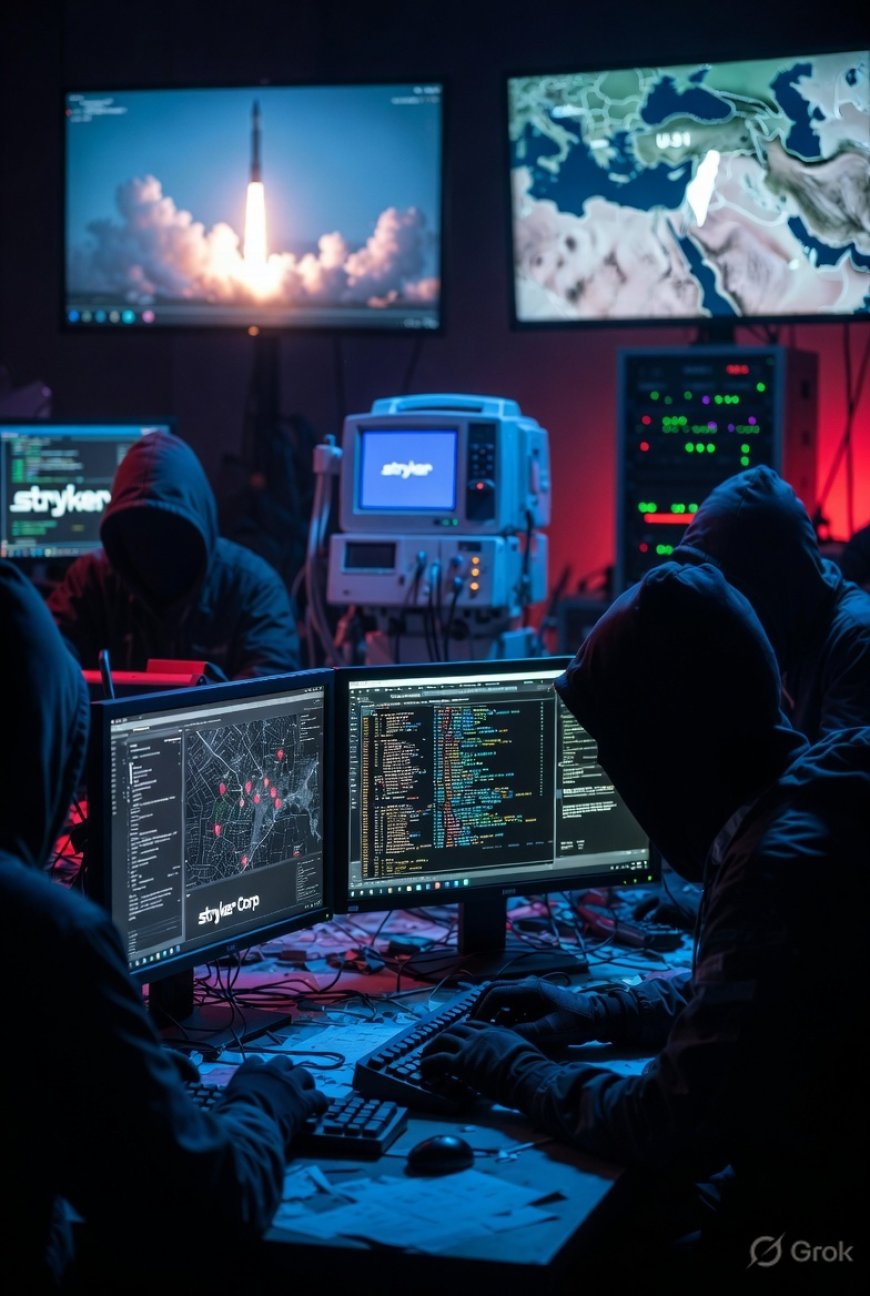
Iran Expands War With Major Cyberattack Against U.S. Company: The Stryker Breach and the Rise of Hybrid WarfareIn the early hours of March 11, 2026, thousands of employees at Stryker Corporation—a Michigan-based medical technology giant—woke up to a nightmare: their laptops, cellphones, and corporate systems were suddenly inaccessible. Login screens displayed the logo of Handala, an Iran-linked hacking group. Global networks went dark, offices in dozens of countries shut down, and reports emerged of widespread data wiping across more than 200,000 devices and servers.This wasn't a random ransomware incident. Handala quickly claimed responsibility on Telegram and other channels, framing the attack as direct retaliation for recent U.S.-Israeli military strikes on Iran—including a devastating February 28 missile strike on a girls' school in Minab, southern Iran, that killed over 170 people, mostly children. The group boasted of extracting 50 terabytes of data and erasing critical systems in what they called the "beginning of a new chapter in cyber warfare."Stryker, a leader in medical devices—from surgical robots and joint implants to hospital beds and operating room integration tools—serves hospitals and patients worldwide. The company reported a "global network disruption to our Microsoft environment" in statements, with no confirmed ransomware but ongoing investigations into the full scope. Operations remain impacted, and the timeline for full recovery is unclear. Stryker's stock dipped amid the news, underscoring how cyber incidents can ripple into financial markets.Who Is Handala?Handala (also known as Handala Hack Team) is a pro-Iran, pro-Palestinian hacktivist collective with documented ties to Iran's Ministry of Intelligence and Security (MOIS). Active since around 2023, the group has targeted Israeli entities and Western interests aligned with them. In this case, some reports suggest Stryker's past acquisition of an Israeli company (OrthoSpace in 2019) may have factored into the targeting, though the hackers primarily cited the Minab school strike and broader "cyber assaults against the Axis of Resistance."The attack appears to have exploited Stryker's Microsoft Intune endpoint management system, granting attackers broad control to deploy wiper malware—destructive code that permanently erases data rather than encrypting it for ransom. This distinguishes it from typical criminal hacks: it's geopolitical retaliation, not profit-driven.Broader Context: From Battlefield to Digital FrontThis incident arrives amid an escalating U.S.-Israel-Iran conflict that began with joint military operations against Iranian targets. Cyber operations have surged on both sides. Just days earlier, reports surfaced of cyberattacks on Iranian infrastructure, including Bank Sepah (disrupting IRGC payments). Iran has now expanded its response to hit U.S. civilian targets in healthcare—a sector previously considered somewhat insulated from state-level cyber aggression.The implications are profound:
- Healthcare vulnerability — Disrupting a company like Stryker could indirectly affect patient care through delayed equipment, software, or supply chains.
- Hybrid warfare escalation — Traditional military strikes now pair with cyber "decapitation" operations targeting economic and civilian infrastructure.
- Global supply chain risks — With Stryker's reach across 79+ countries, a single breach demonstrates how interconnected systems create widespread exposure.