Budget 2026 Expectations Live: Key Focus on Growth, Tax Relief, Reforms and Global Challenges
Budget 2026 expectations live updates as FM Nirmala Sitharaman prepares to present the Union Budget on February 1. Focus on growth, tax relief, reforms, and global risks.
 Ellofacts
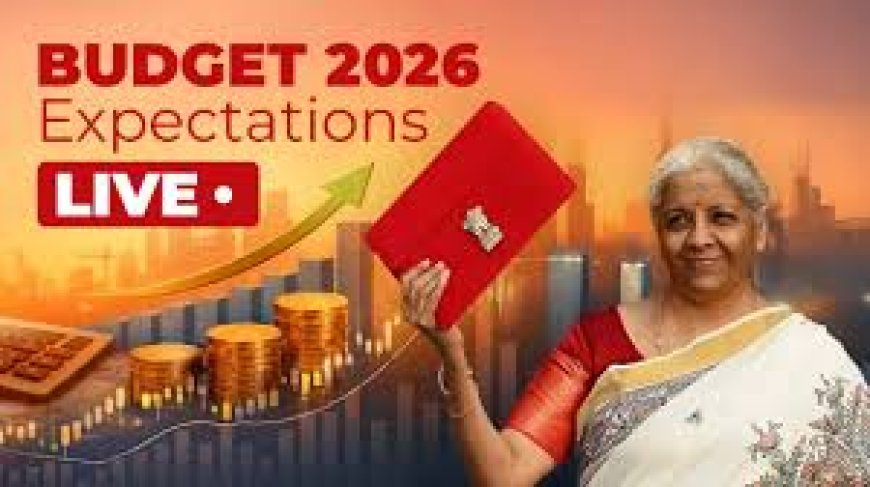
Budget 2026 Expectations Live Updates: Key Focus Areas Ahead of Union Budget
On February 1, 2026, Finance Minister Nirmala Sitharaman will present her ninth consecutive Union Budget, creating a historic record. Budget 2026 is being closely watched as India remains the fastest-growing major economy, even as global challenges such as geopolitical tensions and the ongoing tariff war initiated by US President Donald Trump pose risks to growth.
Taxpayers, industries, startups, and MSMEs are expecting relief measures, policy reforms, and growth-oriented announcements. Ahead of the Budget, the Finance Minister tabled the Economic Survey 2025–26 in Parliament on January 29, which serves as a guiding document for Budget formulation. The survey reaffirmed confidence in India’s economic growth while cautioning against global headwinds.
Budget 2026 Expectations: Key Highlights
Rationalising Fertiliser Use
Rationalising fertiliser consumption is critical for sustainable agricultural growth, says Pushan Sharma, Director, CRISIL Intelligence. In 2023, India’s urea usage averaged 182 kg per hectare, higher than the global average but significantly lower than China’s usage. The government’s PM-PRANAM and Market Development Assistance (MDA) schemes aim to promote balanced nutrient management and organic inputs. However, allocations to organic fertiliser initiatives currently account for just 0.1% of the total fertiliser budget, indicating the need for increased funding.
Banking and Credit Flow Reforms
According to Akhilesh Pandey, Partner, BDO India, Budget 2026 is expected to prioritise credit flow to underpenetrated sectors rather than PSU bank recapitalisation. The focus may include credit guarantee enhancements, MSME risk-sharing mechanisms, and improved recoveries under the Insolvency and Bankruptcy Code (IBC) to ensure sustainable credit growth and reduced NPAs.
Strategic Disinvestment and Asset Monetisation
The Economic Survey highlights steady progress in strategic disinvestment, with approvals granted for 36 CPSEs since 2016. Going forward, equity monetisation could be strengthened by selectively reducing government stakes in CPSEs beyond minimum public shareholding norms, depending on market conditions.
HR Technology and Digital Payroll Systems
Subramanyam S, CEO of AscentHR, stressed the importance of promoting enterprise-grade HRMS and payroll systems, especially for MSMEs. Such digital adoption can enhance tax compliance, social security coverage, and workforce transparency.
Insurance Sector Expectations
The insurance sector is seeking further support for technology-driven distribution models. With the FDI cap increased to 100% and the enactment of the Sabka Bima Sabki Raksha Act, industry leaders believe Budget 2026 should strengthen digital infrastructure, API partnerships, and embedded insurance to improve penetration in underserved regions.
Budget Session Background
Ahead of the Budget session, Prime Minister Narendra Modi referred to India’s progress as a “Reform Express”, emphasising long-term solutions. Since 2017, the Union Budget has been presented on February 1, replacing the earlier February 28 schedule, and the separate Railway Budget has been discontinued. The Union Budget remains a crucial policy roadmap, outlining fiscal priorities, reform measures, and deficit targets for the upcoming financial year.